
Welcome to the transcript of our discussion on the To Lead is To Learn Podcast with Christian Schröder.
In this episode, S1:E10, I sat down with Christian Schröder, Founder and CEO of 10x Value Partners and Utopia Capital Management, to discuss:
- His leadership journey
- His leadership approaches
- His leadership lessons
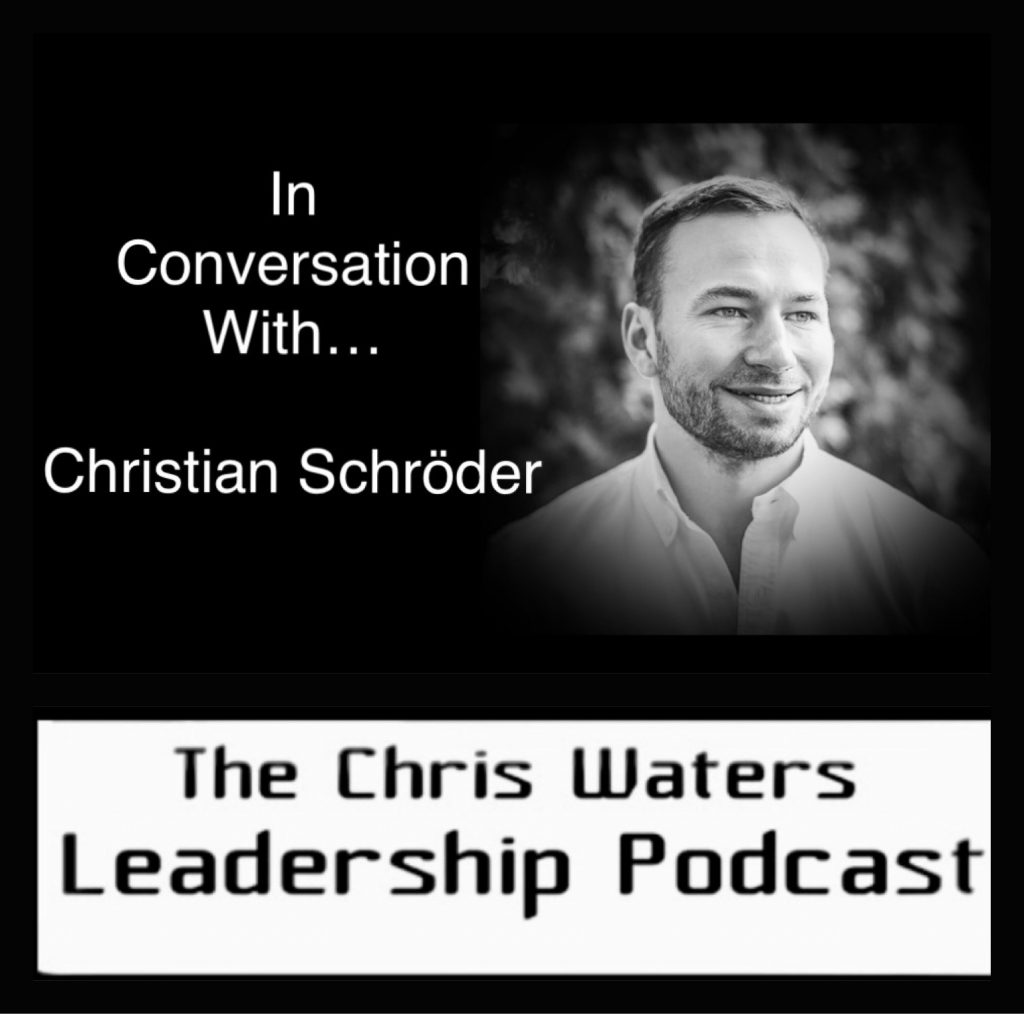
Whether you’re here to revisit your favourite parts of the conversation or to read through the insightful dialogue for the first time, I hope this transcript provides an easy-to-read format of our engaging discussion.

Want To Listen Instead?
Click on the links below to go directly to the podcast episode on the relevant platform:


Don’t forget to subscribe to the To Lead is To Learn Podcast for more in-depth interviews with leading experts in the field of leadership as well as detailed explorations of leadership ideas and approaches.
Key Highlights From This Episode
The insightful lessons and poignant leadership practices Christian shares with us are:
- Embrace Challenges and Ambition: Christian’s early leap into leadership at 21 and his continual drive to tackle challenges illustrate the importance of ambition and a growth mindset in leadership. He emphasised that his purpose in life revolves around growing and overcoming challenges.
“I’ve always been an ambitious person, and I really enjoy the journey of doing things and tackling challenges and doing more, and growing constantly.”
He took a bold step with a German investment group to pioneer e-commerce in South Asia, scaling from a team of 10 to over 400 people across six countries. At a very young age it was a change for him to quickly develop his leadership skillset.
“This was like, really an opportunity for me, to gain a lot of leadership skills in a rapid period of time.”
His first significant leadership role was managing a hospitality business at 18, where he learned to handle team dynamics and responsibilities. This experience laid the foundation for his leadership approach.
“When I was 18, my father asked me to participate in an investment of his…I became the managing director of that…It was a lot of learning by doing.”
The importance of learning, and being open to continuous learning and growing, even when you are in a position of leadership is important. This can help to achieve a level of influence with others, even when they are older and more experienced than you are.
- Collaborative Leadership: Christian highlights the value of helping and empowering team members, especially those with more experience. This approach fosters respect and collaboration within the team.
“You really need to show all the people that you can help them and that you’re committed to help them, and enable them to do their job better.”
Collaboration is a significant tool in leadership, by building a strong, trustworthy team and delegating tasks to capable individuals, as a leader you can allow yourself to focus on strategic activities. Effective leadership is not just about driving excellence but also about working together productively to achieve common objectives. This collaborative ethos not only enhances team performance but also nurtures a positive, enabling work culture.
“I would assume people would see me as an ambitious leader…pushing them and expecting a high standard of excellence…they would definitely see me as demanding, but also collaborative.”
Effective leadership balances high expectations with collaboration and support. Leaders should push their teams to excel while fostering a collaborative and honest work environment.
- Delegation and Trust in Team Building: Building a strong, trustworthy team is essential for effective leadership.
“I try to build a very strong team of people around me that I can trust and that could help me, with taking over different tasks.”
Delegating tasks to capable team members allows leaders to focus on high-impact activities that require their unique skills and expertise.
- The Distinction Between Leadership and Management: Christian distinguishes leaders from managers by their involvement and commitment to team success.
“A leader is someone who is really committed to making the team succeed by also contributing to the work results…A manager is someone more passive who is directing tasks and activities to his inferiors.”
For Christian, leaders actively contribute and work alongside their teams, while managers direct tasks; he sees a clear distinction between the two.
“A leader is someone who is really committed to making the team succeed by also contributing to the work results…A manager… is someone more passive who is directing tasks and activities to his inferiors.“
- The Importance of Problem-Solving and Decision-Making: Christian’s success philosophy centres around effective problem-solving and decision-making. He emphasises leveraging a network of experts, being analytical, and seeking consensus to make informed decisions.
“Building companies is a series of problem-solving…improving really the quality of your decision-making as an entrepreneur, to see growth and success.”
One of the key pieces of advice which Christian suggests is building a network of people who can help with a 5-minute call. This can help with any problem-solving or decision making which you need to undertake.
“Almost every problem has been solved before, so you just need to find the solution somewhere.”
When facing challenges, taking a step back to analyse the situation rationally can lead to better solutions.
“Sometimes it’s useful when you face a problem…take a step back, and rationally analyse the situations, map the different permutations, decision possibilities.”
Strategic problem-solving involves understanding the root causes and exploring various decision paths to find effective resolutions.
- Resilience and Mindset: Christian stresses the importance of resilience and maintaining a strong mental mindset during difficult periods.
“The number one reason why companies fail…is because founders give up…to build this very strong mental mindset of sustaining periods of difficulty and hardship is one of the key traits of a leader.”
Perseverance is crucial for sustaining a business through challenges and periods of enforced change due to external stressors. A leaders’ perseverance correlates with an organisations resilience.
- Coaching and Mentorship: Christian draws a distinction between coaching and mentoring, both of which he considers vital to leadership.
“A mentor… provides guidance for a large part of your career, over a longer period of time… whereas a coach is much more focused on solving a short-term problem.”
However, he emphasises how, through his definitions, he believes that a mentor can be a coach, yet a coach can not be a mentor.
- Creativity and Cross-Context Innovation: Transferring successful ideas from one domain to another can lead to groundbreaking innovations. This approach encourages creative thinking and problem-solving.
“I try to take concepts from one context, like the stop-loss order from trading, and apply them to another context where it’s conventionally not used.”
Creativity is a crucial leadership skill that can enhance decision-making and problem-solving by enabling leaders to see unique solutions.
“I would see myself as a very creative person. I think, it’s definitely…a skill that is useful as a leader to develop.”
- Principles of Success: Christian’s leadership approach is built on several key principles:
1) 10x Principle: This principle emphasizes relentless improvement through high-quality decision-making and swift execution.
“If you have a rate of progress of 1% per day… you get a 10x improvement year over year.”
2) Opportunity Universe: Christian advocates for expanding one’s network and resources to uncover hidden opportunities.
“There are opportunities… you need the right tools, guidance, and being in the right location.”
3) Assuming Responsibility: This mindset fosters continuous improvement and accountability.
“Assuming responsibility for all the bad outcomes… is very powerful in pushing you to build systems, routines into your life and work habits to achieve only good results.“
4) Stop-Loss Order in Life: This principle emphasises the importance of setting predefined limits to prevent excessive losses of time and resources.
“Employing this mindset that you ‘ex ante’… you wanna know at what point you will discard the plan s, and switch to plan b.”
Full Transcript of this Episode
Enjoy the full transcript below!
Chris (Host)
This is to lead is to learn. In this very special episode, we will be talking to a real-life leader about their experiences of leadership and any thoughts and visions for the future.
____Introduction Clips____
Chris
On today’s episode…
Christian
Like the way the Universe is, each star can be seen as an opportunity…If you work hard and if you’re willing to put in the hard work, using your talent for the better of humanity…If you have a rate of progress of 1% per day, what you get is a 10 x improvement year over year…The number one reason why a company sales is because founders give up…I mean, we build only 1 to 2 companies a year…Climate change is a problem that is, like, solvable…You can extrapolate the past into the future…If the technology works, it can become a multibillion dollar company. If it doesn’t work, it’s not going anywhere…
Chris
You talked about the big challenges there.
Christian
…Un-fuck the planet, make the world better, build Utopia on Earth today, because, I mean, like, we have the ability to do so and to do good in the world…Kind of invest a lot of money today to have a better future tomorrow.
____Main Discussion ____
Chris
Without further ado, here’s Christian Schroeder, serial entrepreneur, angel investor in tech and impact companies, and CEO and founder of 10x Value Partners and Utopia Capital Management.
Chris
So, my first question is, every leader has their own story of how they’ve reached their current level. Can you give a brief summary of your journey that you’ve taken to get to where you are now?
Christian
Yeah. Absolutely, Chris. And thanks for having me on your podcast.
So personally, I’ve been an entrepreneur investor for over 10 years. Been involved in over 50 different companies, mostly as an investor. But I was actually also actively involved in building a number of technology companies as a CEO or C-level executive.
So, when I was 21, I took a big leap, and worked with an investment group from Germany to pioneer the concept of ecommerce in several countries in South Asia. And there I took over a team as a CEO of 10 people, and we rapidly scaled this business into 6 countries and over 400 people. So, this was like, really an opportunity for me, to gain a lot of leadership skills in a rapid period of time.
Before that, I was also having, like, smaller entrepreneurial experiences, starting smaller businesses, managing, like, 5, 10 people here and there. And so that provided, kind of like, the groundwork I would say, for enabling me to manage these large teams. And from there onwards, what I focused on is kind of coaching and mentoring our founders, building their businesses either in the capacity of an investor or in the capacity of a board member or founding investor working extremely closely with companies. I would say over the last 8 years, I’ve worked extremely closely with over 15 companies, coaching the CEO and the leadership team. And for that, I was able to gain a lot of additional leadership experience.
I would say within Divider, like, 10 x Value Partners Group, we have around a 1000 plus people now. So, it has become quite large. And, yeah, I mean, there are a lot of challenges and learnings, of course, is that we can talk about later.
Chris
I mean, that’s very impressive that you took that step at 21. That’s very young. So, you’ve had a meteoric rise very early on your career. What do you put that down to?
Christian
Look. I’ve been always, like, an ambitious person, and I really, enjoy personally the journey of doing things and tackling challenges and doing more, and growing constantly. For me, kind of like, that’s how I see the purpose of life, to an extent, to grow and overcome challenges. So that’s why I was always, like, very ambitious to pursue, projects.
____Break____
Chris
So, what was your first position that you can put down that you started learning your leadership approach?
Christian
I would say it’s very difficult to pinpoint a very specific situation. If I had to pick 1 when I was, I mean, I’m coming from entrepreneurial family. And when I was 18, my father asked me to participate in an investment of his, which was like a hospitality business in Germany. And there I became the managing director of that. It was like a bar in one of the busiest suites in in one of the major cities in Germany, in Cologne. And there I was in charge of managing a small team of like 10 people, which I would say is like, the real first leadership experience I’ve had in a business context. I was running that for 2 years, and it was a lot of learning by doing, and I would say that was like the first leadership experience I had at age 18.
Chris
That’s pretty young, and you probably had quite a lot of people that were older than you. How did you approach that dynamic?
Christian
Look. I think like, my philosophy of managing people who are older than you or more experienced, is that you really need to show all the people that you can help them and that you’re committed to help them, and enable them to do their job better. So that they can clearly see the value in you as a leader, and they feel empowered and enabled. I think that’s the right way to handle people with, with a higher seniority or more experience.
Chris
So, what would you say is the difference between a manager and management, and a leader and leadership? Is there a clear distinction between the two for you?
Christian
I would definitely say so. I wouldn’t say that the distinction is very clear. I think it gets fuzzy, and there are a lot of varying definitions.
So, for me, a leader is someone who is really committed to making the team succeed by also contributing to the work results. For example, like, your CEO who is in the trenches of the sales team, to generate the monthly numbers that are required. I mean, that’s a leader. Someone who is not just telling the team what to do, but also works with the team to get the results.
The manager, I would say, is someone more passive who is directing tasks and activities to his inferiors, and it’s a clearer power dynamic, that is highly distinct between the manager and the employee. Does that make sense?
Chris
Yeah. Yeah. I completely agree with exactly what you just said there. It’s kind of reaffirming to my belief as well.
So you’ve been involved in many companies, you said, in your early career, as well as investing in quite a lot of start-ups. So through your involvement, you’ve been able to grow these companies. What is your toolkit or Swiss army knife, if you like, of success that you have learned to use which allows you to achieve this growth?
Christian
So I think, like, my overall philosophy of entrepreneurship, and building companies is that, building companies is a series of problem solving. Each day, you’re faced with new challenges, decisions that you need to make. And the better you manage to kind of solve those challenges, the more growth and success you can instigate.
So really, what it comes down to is solving the challenges that you face in the best possible way. And for that there are couple of tools you can use. I mean, one of the tools, for example, I call it the 5-minute expert call. So, you should cultivate a network of people, mentors, peers that have faced similar challenges before.
So, if you face a problem that you don’t know the solution, that’s fine, you need to just realise this and find the right people in your network who can help you with getting guidance on solving the problem. In other instances, what you need to do is just you need to sit down, look at the data, look at the numbers, be highly analytical and data driven, and figure out the right course of action through brute force analysis. In other cases, it’s better to get a consensus opinion and survey a large number of people to get a representative decision. But I would say, what it comes down to, and those were, like, three examples, is improving really the quality of your decision making as an entrepreneur, to see growth and success.
I mean, when it comes to me personally, I can be like, really this 5-minute expert for a lot of the founders that we work with because we have seen so many challenges across companies; how to know if someone is the right person, deciding in what geographies to expand, evaluating the terms of an investment which are proposed by an institutional investor. So, there’s a myriad of permutations of things that we have seen over the last 10 years across the 50 different companies so that I can really act as this Swiss army knife of giving good guidance on almost any type of problem the company faces and the decision that needs to be made. And that goes back into the arc of, like, this series of quality decisions that you need to make to become successful on as an entrepreneur.
Chris
The three approaches that you listed there, specifically, the 5-minute expert call, the looking at the data and being analytical, and getting a consensus from other people. They’re all outward looking, so it’s almost encouraging entrepreneurs to not just stay within themselves, but to seek expert guidance elsewhere.
Christian
Exactly. I think it’s important to be humble and to be cognisant that you don’t have all the solutions in yourself. I think you can find them spread across the world. I think, a saying I like to say is that, like, almost every problem has been solved before, so you just need to find the solution somewhere. I think, what you can do within yourself, and I think that’s where you want to go, Chris, with this question. It’s, like, just to build this mindset that you don’t need to know all the solutions, but also find the willpower to sustain difficult periods.
So, the number one reason why companies fail actually, and that’s something that that has been found in scientific literature, is because founders give up.
So, I think to build this very strong mental mindset of sustaining periods of difficulty and hardship is one of the key traits of a leader to make a company successful.
Chris
Yeah. I love the quote that you brought there, that almost every problem has been solved before. Like, even in the ever-changing world of business, would you say there’s no problem that can come up that a similar one hasn’t been faced before?
Christian
So, I think the clear exception to this is, like, hard science problems. So, things that really are pushing the edge of cutting-edge innovations. So, things such as nuclear fusion, artificial general intelligence, complex biomedical and health problems, advancing longevity. So, these are things that are, like, really cutting-edge science. Which are science problems that haven’t been solved. But the more mundane problems like, how do I hire the right person for position x? How do I close my first enterprise client? How do I transition from founder-led sales to a more scalable sales infrastructure? So, these are all how do I do content. I could go on for, like, hours and hours. I mean, these are all problems that have been solved before.
So, I would say, except if it’s like a very hard science problem, most likely it has been solved before.
____Break____
Chris
So, within your current company, 10 x Value Partners, you invest in organisations at early stages. What do you look for in those companies here?
Christian
So, I think we have distinguished between 2 things. So, we have 2 activities within 10 x value partners.
Firstly, it’s investing, but we also create companies from scratch, kind of like cocreating a business with founders. So, when we talk about the co-creation, which is really the main focus here, kind of like what we do is very deep research of large macro trends, industries, and we try to identify the opportunities to create new billion-dollar companies. And that would even be, like, in a very large existing industry that is undergoing tremendous change, or a new up and coming industry, that is growing extremely rapidly. So, for example, right now, we are looking a lot at the market of climate change mitigation, which holds a tremendous potential and is growing super rapidly. So, for these kind of markets, we then look for the right people, to team up with us to tackle this market and to build a leading company.
So, what we are looking for in the single world? I would say, it is something that I call product-founder-market fit. So, we want to have the right idea, the right product, paired with the right founder who applies to us, paired with the right market opportunity that we have identified through our research.
I mean, each year, roughly, we have, 1,000-1,500 people applying to us to become a founder. So, for this we have really a very good choice of people who we want to work with. We can afford to be highly selective, and also get the pairing of opportunities, markets, and founders right.
So, that’s like the first activity of 10 x, and here we are looking really for the overall market potential, an unfair advantage that we might hold in capturing this market potential, and finding a founder or founding team that has a very high degree of fit with the opportunities that we plan to pursue. So, this is like the first activity of the company; building.
When it comes to investing, which we also do, we invest in around 10 to 20 companies each year, of companies that are already up and running, existing. There are, like, 2-3 main things we look out for. The first thing is the quality of the founding team. So, do we believe that these people really have the capabilities, experience, and willpower to make the company successful? That’s the first criteria. The second criterion is that we focus a lot on the traction and numbers. So, we like to…or it’s my one of my beliefs that you can extrapolate the past into the future. And I think people who are iterating quickly, who have a very fast speed of progress, rate of progress, they will also make fast progress in the future, resulting in a lot of growth and a big success.
So, we look at the traction and the rate of growth. And then I think the third thing that we really like to assess is the fundamental viability of the business. So, we look at; does this market exist? What is the competitive landscape like? Is there room for new entrants?
If we scale this company, make it very big, would it be meaningfully profitable? So, there are a lot of businesses where you can build a very large company, like grocery delivery, but where the margins are extremely small. So even if you win the markets, the value of what you have built will not be very large.
I think, on the other hand, there are technology businesses with a very big moat. Moat means it’s an entry barrier or something that prevents other people from entering the market. That can be intellectual property, network effects, or some other factors, like a brand is a weaker kind of mode.
So, I would say, to wrap this up, we’re looking at the quality of the founder team, the traction, the numbers, and then the overall viability of the idea.
Chris
So, when you’re looking at the quality of the founder team in particular and the capabilities, experience, the willpower, you say. Are you looking for someone who can lead it independently, some someone that you don’t need to put too much input and leadership in yourself?
Christian
Look. I think, like, when it comes to the investments that we do, I think that’s it’s a must. So, we want to back people with previous experience or a strong indicator that they are able to lead and scale a team. When it comes to the companies that we build from scratch due to our stronger involvement. I mean, we always…almost act like, additional cofounders to the team. I think there is more room to develop people and to coach them. Typically, what we see is, for example, that we have people who have very strong experience in the domain such as, like, consulting, investment banking, or like, industry experience, or people with like, experience working in a start-up, but not experience of being a CEO of a company. And due to our deeper involvement in these companies that we build, maybe build only 1 to 2 companies a year, we can provide more coaching and mentorship to those founders and CEOs.
So, I think we can be a bit more flexible and risk taking when it comes to the companies that we build from scratch. But in general, I think we want to select very strong people. I mean, as I mentioned, we have, like, 1,000 or a 1,500 applications each year. We are selecting, like, at maximum 4 or 5 people out of those. So, as you might be able to imagine, we are we are selecting, like, the top of the crop.
Chris
Yes. So, you you’ve got your companies that you’re building. You’ve got your companies you’re investing in. 10 x itself must have a quite big leadership team in order to manage all of that. How do you select the people that work for 10 x in part of your leadership team that you can put in place?
Christian
Look. I think what we are looking for within our own team is excellence. So, we’re looking for people who have a track record over their career of very strong achievements, big achievements, big successes, and people who also are hungry to be even more successful and who are motivated by the prospect of success itself. And we are also looking for people who are very dedicated and impact driven, so who really enjoy the process of building companies, and helping, and mentoring founders. And, yeah to an extent, also making the world better for the companies that we built.
____Break____
Chris
So, you’ve mentioned coaching quite a bit within the discussion so far. What does coaching look like for you?
Christian
I think there’s a lot of different definitions that I could come up for coaching. I would try, like, a new one. I think, like coaching allows the person that you coach to borrow your brain and get a fresh perspective on the problems or, like, issues, challenges that they are looking to overcome. And I think through a dialogue, you can really develop, like, a novel perspective and hopefully overcome the problem the person who wants to be coached is facing, and help them to find a solution that they are happy with and that they can employ in an actionable manner.
Chris
Do you see a distinction between coaching and mentoring, or do you think there’s an element of overlap there?
Christian
Look. I would say that there is definitely an element of overlap. I think if I would say, what the key distinction for me would be is that mentoring has a very long-term focus. So, basically, a mentor would provide guidance for a large part of your career, over a longer period of time, looking at a 10, 20-year horizon. Whereas a coach is much more focused on solving a short-term problem or helping you with the status quo.
So, a mentor, I would say, can also be a coach, but a coach cannot be a mentor, if that makes sense, in the way I would define it.
Chris
Yeah. I like that. Sort of giving you a different way of approaching the questions that someone might ask.
Christian
Absolutely.
Chris
So, you have your own set of success principles, which you work by, which you’ve instilled into 10 x. Can you talk us through these and how your leadership approach ensures that these are consistently applied?
Christian
Absolutely. I mean I’ve developed many principles over the years. I would say let’s focus on 3 principles that I think are really the most impactful principles, here to achieve success, and growth.
So, I think the first thing is the 10 x principle, which has inspired the name from my company. So, basically, what the 10 x principle implies is if you if you have a rate of progress of 1% per day, spread around 230 working days a year, what you get is the 10 x improvement year over year. Which is like then…I mean, if you improve 10 x every year, you’re top in the world.
There are very few companies or entities, leaders, people who can achieve and sustain this 10 x growth rate. And if you then go a level deeper, and think about what that means 1% level of progress. I mean, progress is execution. Execution is consisting out of 2 things. It’s making decisions, 1, and 2, acting on the decisions and implementation.
So, what it really comes down to in this rate of progress is decision making, the quality of decision making, speed of decision making, and then implementing those decisions well and quickly.
So, I think that is actually also something that you see with some of the most successful companies in the world, like Uber, and it’s also akin to what Reid Hoffman said in his book, Blitzscaling. It’s like, you wanna have this very strong bias for action, but also use data and the other things that I’ve explained before as part of, like, a Swiss army knife to make high quality decisions. So, bias the action paired with high quality decision leads to 10 x growth. So it’s a 10 x principle, it’s one of the principles that I use.
I think the second success principle that I have is the concept of opportunity universe. So, basically, the concept implies that everywhere around us, like the way the universe is, there are opportunities. Each star can be seen as an opportunity that is out there. But, I mean if you are in a city, it’s like bright lights looking in the night sky, you barely see any stars. So, most of the opportunities are hidden for you.
So, what you need is the right tools, you need the right expert, like the telescope, you need the right people, so, like, astronomers to point you to the opportunities, so people, but also location. I mean, if you go out into the desert, you can see all the stars. So, your location, tools, people around you, things that can expand your network of opportunities; your opportunity universe.
And just being very cognisant about the factors that can help you to discover new opportunities, and constantly change your set of most attractive opportunities that you might want to pursue. I think that would be the second success principle that I have, that I use for 10 x.
And, I think it’s actually a concept that I’ve taught a number of people who found great success. And, yeah, on my blog on Medium, you can find a more detailed description of the opportunity universe concepts. I encourage you to check that out.
Yeah. That’s the second principle.
So, the first one, the 10 x principle of growth, bias for action and quality decision making. The second one, opportunity universe, finding the right opportunities using the right tools, guidance, and being in the right location. And the last principle here would be the mindset of assuming responsibility.
So, I go to an extent about assuming responsibility for every bad outcome that happens in my life that is almost utterly ridiculous.
So, to give you a concrete example, if I would walk a street, the light would be green, I would be allowed to go, and a car would hit me. I would still think it’s my fault because I could have, before I crossed the road, checked if someone is coming. In a business context, if I would send a calendar invite to someone to meet for coffee, they wouldn’t show up for the meeting, I would still assume it’s my fault because I could have sent them an email before to confirm, or to reconfirm the meeting.
So, I think this mindset of assuming responsibility for all the bad outcomes, it’s very powerful in pushing you to build systems, routines into your life and work habits to achieve only good results. Just to ensure that over time, you build processes to avoid bad outcomes.
So, it’s like a continuous improvement feedback loop, so to say. And I think that would be, like, the 3rd leadership principle that I use to assume responsibility personally for everything that happens in my life and business, and to work constantly towards building system and routines to optimise the outcomes.
Chris
Looking at those three from an external perspective, I’m seeing a growth mindset in the last one. I’m seeing a sort of wider vision in the second one, and I’m seeing quality decision making in the first one. So, I’m seeing a lot of really good leadership practices sort of wrapped up into your three. How many more do you have? If you have these three principles, how many more principles would you say you have?
Christian
Look. I’m in right now in the process of really writing these down. I mean, there’s a lot of tested knowledge of what I’ve learned over the years and discovered. I think there’s probably a dozen more. If you want, I can give you a 4th one, which is kind of like a concept that I’ve adopted from stock investing and trading into the real life, so just like a stop-loss order.
So, when you buy a stock in say, Apple, you buy at $200 a share, you can put in a stop-loss order at, let’s say, $180. And if the stock goes below $180, kind of, you automatically sell the stock and liquidate your position, and you lose 10%. But except for extremely fringe circumstances, you can never lose more than 10%. So, it’s like what I believe, and I think many people believe this, is that value of time and value of money are kind of equivalent.
So, in our daily life, we face situations of uncertainty. For example, take a mundane example, you’re waiting for the bus. You have no information if the bus will show up, when the bus will show up. Schedule, at least in Germany, the schedules are very unreliable. So, the concept of the stop-loss order here would mean you wait 5 minutes. If the bus doesn’t show up, you order a taxi. Because you have lost 5 minutes of your time, you need to take action. So, this is like the stop loss order; stop losing your time.
I think in a business context, what you could do is…let me think about an example. It’s like, if you email someone requesting a proposal or waiting for their reply, you don’t hear back in 2 days. You need to find an alternative. So, employing this mindset that you ‘ex anti’, that’s the very important point. You don’t wanna decide it after the fact, but you wanna decide it when you act. You wanna know at what point you will discard the plan s, and switch to plan b.
That’s like the concept of the stop-loss order in the real-life context.
Chris
Yeah. I I like that one. I think that that’s a great analogy. I love your one for the bus, and waiting for the bus, if it doesn’t come, you invest in the taxi because your time is just as valuable as your money. And especially in business, if you’re going to work or you’re going to a meeting, being 5 minutes late, you know, being 10 minutes late is way worse than being 5 minutes late.
Christian
Exactly.
____Break____
Chris
So, in terms of your business then, you’ve had these principles embedded into 10 x already?
Christian
I mean, I would say so.
So I think, this principle of the 10 x growth and the opportunity universe, it’s things that I’ve discovered very early in my life, or during my university studies. Basically, when I had a bit more time to think about the product, like concepts of how the world functions, like the fundamental web of the world. And I’ve always used these concepts to drive the way I work. I mean, 10 x value products, it’s, to a large extent, driven by me. I think some of the other concepts that I found them over the years, and I’m constantly trying to learn, adopt new concepts.
Still, like, one way…and by that, I mean that a pattern that you have might have spotted before, is that I try to take concepts from one context, like the stop-loss order from trading, and apply them to another context where it’s conventionally not used. But where this concept from one domain, can be very beneficial when being applied to another domain. I think that’s actually, like, it comes a bit from research I’ve also done, and the fact that a lot of Nobel laureates, they make their scientific discoveries, taking insights from one domain, applying them to a new domain. So, like, applying mathematics to psychology gives you game theory. And also, applying let’s say, if you look at Steve Jobs applying principles of design and creative process to hardware gives us the iPhone.
So, this methodology of marrying, bringing together, different disciplines, I think it’s how you can come up with innovative leadership principles as well.
Chris
I think there’s an element of creativity in what you’re doing, which I think must be a value that you hold personally.
Christian
Definitely. I would see myself as a very creative person. I think, it’s definitely also something I mean, that is a skill that is useful as a leader to develop. And I think it’s also possible to develop creativity, stimulate creativity. Because, if you go back to what I said earlier, entrepreneurship and leadership is a series of problem solving. So, creativity, obviously, is one of the factors driving the quality of your decision making because you see solutions that other people might overlook or not be able to see. So, you have a large opportunity universe, larger set of decisions or actions that you can take.
Chris
What other values would you say would make your core values which you take into your entrepreneurship, your leadership?
Christian
So, look. I mean, in terms of values, there are couple of things that are really important to me. The first one is fairness and meritocracy. So, kind of, I believe that the world is fundamentally a kind of fair place, especially in the long run. So, if you work hard and if you’re willing to put in the hard work and not give up, I think you will get what you deserve in the long run.
I think another thing that I believe is that, the future will be better than the past. So, I have sort of this optimism for the future, and I believe that, with the tools of entrepreneurship, innovations, many of the challenges that right now we feel are very hard to overcome such as, like, climate change, world hunger, lack of affordable housing, etcetera. And those are like, fields that we’re actually investing in with our new firm, Utopia Capital, whose mission is to build Utopia on Earth today. But, yeah, I mean I have this optimism for the future.
Then another thing is that I believe in contrarian thinking and innovation. So, I believe that we need new ideas to overcome the challenges that I mentioned before, and that we need to have the kind of almost audacity to think that we can do things in a better way than they are being done today. And, yeah. I believe if you put the right puzzle pieces together…so it comes back to product-founder-market fit. So, the right idea, the right team, and the right market, you can really create something meaningful, un-fuck the planet, make the word better and have a lot of success as a team, as a leader.
Chris
It very much sounds like when you go through your values there, it sounds like you are living out your values, which it’s very refreshing to hear that someone has got these cemented values, and they have built, you’ve built your entire work life on this. You said you got your Utopia Capital Management business. You talked about the big challenges there. So, what inspired you to take the challenge? Was there a moment that you just went, this is what we need to do now?
Christian
Look. I mean, what I was thinking about last year is that I’ve built a lot of companies now. I’ve got multiple businesses that are in the range of being worth a $100 million or more. I’ve got a number of successful exits, so what I was really thinking about last year was what will I do with the with the next 10, 20 years of my life. And, I mean, of course, I could just continue building and investing in more companies that just make money. And, I mean, I’m still doing that. But I also was thinking, what can I do with my time that can have a meaningful impact on the world and solve big problems? And what I see with a lot of the entrepreneurs that have these ideas, to solve the big issues in the world, is that they are more like people who are brilliant scientifically, but who sometimes lack the business experience of how to turn a hardware or technology product into a large-scale business.
So, I see a lot of opportunity to partner with those entrepreneurs and coach and mentor them with the leadership experience that I have had to jointly turn their idea into a large company, or sort of the help of capital that we can provide. And then that’s what inspired me to create Utopia Capital, because, I mean we have the ability to do so, and to do good in the world. And I think, if you are very good at something, I think there’s kind of almost this moral obligation of using your talent for the better of humanity, which I see. I mean, that’s something that I believe, many people believe this in Silicon Valley, in the world. So, I think the simple answer is because I can and because I enjoy it.
____Break____
Chris
In terms of Utopia Capital Management, and that appears to have grown out of 10 x, as well as your reflecting and wanting to do the better for humanity. It appears to have grown out of 10 x in the fact that you’ve identified there are these people that don’t have the skills that you have that if you partnered with, they could progress further. Is that right to infer?
Christian
Exactly. Yeah.
And I mean, what we do with 10 x is really, more like this focus on scaling companies. So, I think, if you would say it’s like a 1-100 or 1- infinity type of innovations. And whereas with Utopia, we like looking at companies that have, like a 0 to 1 risk. So, kind of like taking technology risk, if the technology works, it can become a multibillion dollar company, if it doesn’t work, it’s not going anywhere.
So, like fundamentally, when it comes to the degree of risk we are willing to take with Utopia versus 10 x. I think, with Utopia, we are comfortable taking a lot more risk, and different risks, versus 10 x value partners. Which is why we created this new entity and brand for our impact driven investments.
Chris
So, you’ve highlighted world hunger, homelessness, climate change as some really big sort of problems that we’re facing at the moment. How far away, from your experience and your involvement in the sector, how far away do you think we are from actually solving them?
Christian
Look. I think the most difficult one of those to solve is affordable housing. Because, I mean, when it comes to housing, looking from a first principles perspective, even if you bring down the cost of housing, you can never bring it down to nothing. I think like, what we are seeing now in the world is…I mean, if you fundamentally look at the price of housing, it’s a derivative of the value of the properties.
So, how much it costs to build and buy, like a piece of land and to put a home or house on it. So, it’s the cost of the real estate plus the cost of the building materials. I mean, what we see now is, like innovative solution that always is to put housing anywhere in the world regardless of grid connections. To do like, solar power, water generation, and wastewater treatment systems. I’ve invested in a company called Arcbuilt, which builds the most sustainable and grid independent home in the world, which you can put anywhere. We can put it, like, in a wasteland, and it will work.
So, this is bringing down the cost of real estate integration, which features back into the cost of living and the affordability of living. But, fundamentally, we will never be able, even of the most scalable, efficient processes, to make the cost of housing 0. But I think we can slash the cost of housing by probably, like 50 to 80%, compared to where it is now. Especially, if people would have flexibility on where they live, if they don’t need to live in LA, San Francisco, New York, but they can also live in a very nice countryside.
When it comes to world hunger, I think what we will see, this is my strong hypothesis, is that we will see an exponential decrease in the cost of food similar to what we’ve seen with computing and computer chips, driven by technologies such as precision fermentation, artificial meat, which is grown in reactors, and technologies such as, like, bio stimulants, fertilisers. I’ve invested in one company called The Growers, which has developed a bio-stimulant that can massively boost crop yields and crop productivity. There are other technologies that we are looking at boosting crop yields.
So, I wouldn’t be surprised over the next decade if it’s possible to increase the productivity of agriculture and farms by a 100% or more, effectively doubling the foods that we have in the world. And then, if we look at the other technologies and where the food is going, a lot of the food is going towards feeding livestock. And if you can grow meat, in reactors, which I mean, it has come down a lot. I mean, the cost of an artificial hamburger many years ago used to be, $800,000, now the cost of an artificial hamburger patty is around, like, $8. So, we have already seen this this cost curve, the exponential cost decrease, similar to what we have seen with computer chips. I think like that will also save a lot of resources, and allow all of us to have more soy, grain, wheat, to feed people. So, I think, if you look at those two trends combined, I think, word hunger, even if population continues to increase, it’s like a thing that we can very comfortably solve.
I think when it comes to climate change, really here what is needed is more investment. I think climate change is a problem that is solvable, just based on the hard, underlying pieces. Like, if you think about it from first principles, we just need to cut the existing emissions. So, this we need investments into decarbonising the emitting infrastructure, transportation infrastructure. That’s like energy generation, power generation, agriculture, demand. Demand is, I think, 8% or 3% of global carbon emissions. So, I think, if you focus 80/20 on like, 10-20 industries, I think you can cut 80-90% of global carbon emissions, and methane emissions, and other things.
So, I think, what’s needed here is just a lot of investment, and we are talking here trillions of dollars. We have done some calculations at Utopia Capital, estimating if we would invest out of, like 2% of global GDP, over sustained periods of 40, 50 years, it would be possible to mitigate most of the impacts of climate change, potentially even reverse the climate change that has already happened today. So, I think this is more like a problem of collective willpower and government action to kind of invest a lot of money today to have a better future tomorrow.
And I think, kind of like a modulating factor for this, and the amount of money we need to invest, is the rate of technological progress and innovations. Which I mean, there are a lot of innovations that are in the making right now. Many people are not aware of them. There are innovations, none of us are aware of because they will only be invented in 5 years. But if we feature this unknown-known, which is like the future innovations that will exist to mitigate climate change, I think it’s definitely something that can happen if we just invest trillions of dollars into solving the problem.
Chris
So other than investment, which is huge, and there needs to be a call for action for that. What else do you think we are missing to solve these three problems, in particular climate change? What else are we missing?
Christian
Look. I mean, I think I would stand by my answer. I mean, of course, you can always say, okay, we, every one of us, needs to stop eating meat or needs to take the train instead of the plane.
I think, it’s very hard to change human behaviour, and to change everyone’s behaviour. I think also in emerging markets. I mean, there is, like, very high levels of poverty, and people just want to improve the standard of living. The richest 1% in the world, emit 30 times as much carbon as the poorest 50% on a per capita basis. So, I think, the poor people, they want to become rich, so they will emit more carbon.
So, I think, changing the behaviour of people is a very childish view of solving this problem. I think what we need to do is make it profitable to solve this problem, so that the big money can come in. And, I mean, the invisible hand solves the problem. The market solves the problem. It needs to be profitable to solve the problem of climate change.
And, I think, then it comes again down to how much money do we invest, I mean, right now, every year, we invest, like, 1 trillion dollars globally in the decarbonisation of the economy. I think we need to bring this to 22 trillion dollars and then grow it progressively from there. So how much money do we invest in the decarbonisation of the economy, and how efficient is this? So, what’s the bang that we get for the buck?
And, I mean, the efficiency is largely driven by innovations, which are now in the childhood stage or baby stage. I mean, some innovations, such as solar and renewable energies and battery technology, they have been around for much longer. And they are now, cost competitive or even cheaper than fossil fuel power generation. So, I think, yeah, it’s basically the amount of money we invest and how efficiently that is spent, how much bang we get for the buck. And, I mean, the greater the rate of innovation, and that’s something we are trying to fuel with Utopia, the faster and the more likely we can solve climate change, if that makes sense.
Chris
So, would you say that some companies, and governments, are taking the childish view that people need to change their behaviour then, rather than taking the adult perspective of let’s invest in getting ourselves out of this problem.
Christian
I mean, I think so. In the end, it’s all about results and ensuring that you get the results that are needed. And I think it’s more feasible to invest in this solution and fight the problem with money, versus doing a behavioural intervention, and trying to make people do something they don’t want, and go against the interests, the survival instinct, and the deeply ingrained human behaviour or will to have a better life and to enjoy life.
So, I think also, it’s a very profitable investment. I think there are projections that if you look at the 2 trillion dollars needed every year to mitigate climate change, if we don’t do this, the impacts of climate change could cost us, like, 10 to 20 trillion dollars in GDP by 2100, per year. So, that figure I got from Morgan Stanley. Or it could cost us, like, 10 trillion dollars in damages per year. So, you get a 5 x bang for the buck if the technology is kind of here today. So, might get higher returns. I think it’s a very sound investment.
And I think, the behaviour intervention can work, but it should not be the plan a. I think it’s a ‘nice to have’. I think the real solution here is, it’s just large-scale investment and fighting the problem.
____Break____
Chris
Going back to you as, an entrepreneur, as a leader. You have such a diverse portfolio. Your time must be massively challenged and drawn in so many different directions. How do you manage your work life balance?
Christian
Look. I mean, like, the kind of mindset that I’m adopting for this is like a mindset also of continuous improvements of routines and systems. I try to build a very strong team of people around me that I can trust and that could help me, with taking over different tasks. And then for each task that remains, or like everything that remains kind of is either something that requires my brain power to solve this very specific problem, or like I have the rest to solve it.
So, these are the type of tasks I like to do. It’s something that I deeply enjoy.
So, this is more like the life aspect of work, life balance. Everything else, like doing my laundry, ordering my meals, organising my day-to-day life, I go to a ridiculous extent with this. I try to automate it, so that I don’t need to take care of this. And I think, like, I cannot remember the last time I walked into a grocery store. I think it was, like, maybe 8 months ago when I was on vacation.
So, yeah, I mean, having a lot of automation to free up time. I mean, it’s, of course, all expenses. You need a certain income to automate on that level. I think I’ve I spent probably every month, like, a couple of thousand dollars on just these automation features to free up time.
But that enables me to spend every waken minute, really, on just things that I either enjoy doing, giving me pleasure, or things that’s gonna have a deep value impact on the businesses that I run.
Chris
So, you said you built a strong team. I ask every guest this that comes onto my show. What would it feel like if you were to put yourself in the shoes of someone who follows you, to experience your leadership, to be led by you?
Christian
I mean like, look, I mean, I can only hypothesise what people would feel. But I would assume people would see me as an ambitious leader. Like, we’re pushing them and expecting a high standard of excellence. I would say, they would definitely see me as demanding, but also collaborative, enabling, and, like, really having a very honest way of working and just doing everything in a productive, and goal-oriented manner.
Chris
So, looking into the future then, let’s go forwards 10, 20 years. What does the future hold for you personally?
Christian
Okay. I think it’s very hard to predict the future. I think it’s not impossible, by the way, to predict the future, but that’s a topic for another day.
So, I would say, it’s very hard to predict where I would be in 10, 20 years. I can tell you where I would like to be in in 1 or 2 years. But, I mean, the rate of progress, the innovation, and what’s happening in the world is ever increasing in terms of, like, speed. So, one of the craziest scenarios might be that, like, in 20 years, every one who is listening goes to a virtual reality that is customised to your personal preferences, and everyone lives their happiest and most enjoyable life possible, in a computer simulation, with AI enabled, NPCs. I don’t know.
Like, I mean, this is a scenario which is crazy, but I just want to make the point that it’s impossible to predict the future with the rate of technological progress that we see right now.
So, I think, what I want to do, going back to your question, is I want to enjoy the journey of building things, investing in great companies, working with inspiring visionary entrepreneurs, and make the world better. So, I just have a very enjoyable, challenging journey over the next 20 years, and I’ve made a lot of progress from where I am today versus where I will be in 10, 20 years.
Chris
If we look at the bigger picture then, what would you like your legacy to be?
Christian
Look. I mean, in terms of legacy, what motivates me is just to do good things for the world, use my skills and talents to have a positive impact. So, I would love to see that as many people get positively impacted through the companies that we are building and investing in. I also would love my legacy to be to have inspired a lot of people, leaders, to become better versions of themselves, better leaders, and…or just better operators, better at operating their own lives, making decisions for the person’s life, just positively impacting a large number of people.
I mean, that’s also a reason why I’m on your podcast today, that’s one of the things that I hope to leave as a legacy to the world.
Chris
So as a final parting question, I like to ask any guest that comes onto my show, what is the most important lesson or piece of advice which you’ve learned that you could give a young leader that’s just starting in their journey?
Christian
I think it’s a good question. I think, one of the most important pieces of advice I would give is, sometimes it’s useful when you face a problem, and then if you’re struggling to just pause, take a step back, and rationally analyse the situations, map the different permutations, decision possibilities, understand why you are in the situation, just to find a good solution. So, like, the ability to take a step back and take a bird’s eye view on the problem.
____Closing____
Chris
Do you have any final thoughts for us?
Christian
Erm, no, I mean, Chris, I really enjoyed our conversation. It was a great pleasure. I really liked your questions. Challenging me a bit. So, it’s a good Monday morning exercise.
No, I mean, I really appreciate being on the show. Of course, like, yeah. I mean, I would, if anything that I’ve said resonated with any of your listeners, I would appreciate a follow on LinkedIn, a follow on Medium. I’m quite easy to engage with. And, yeah, I mean, we always like to engage with people who share the same vision and mission like us.
Chris
Excellent. And we will include each of those links in the description for this podcast. So, thank you very much.
Christian
No worries, Chris. Great pleasure, and thanks for having me on the show.
Chris
Thank you.
And until next time, remember, to lead requires us continuously learn.
Transcribed by: https://restream.io/tools/transcribe-podcast