
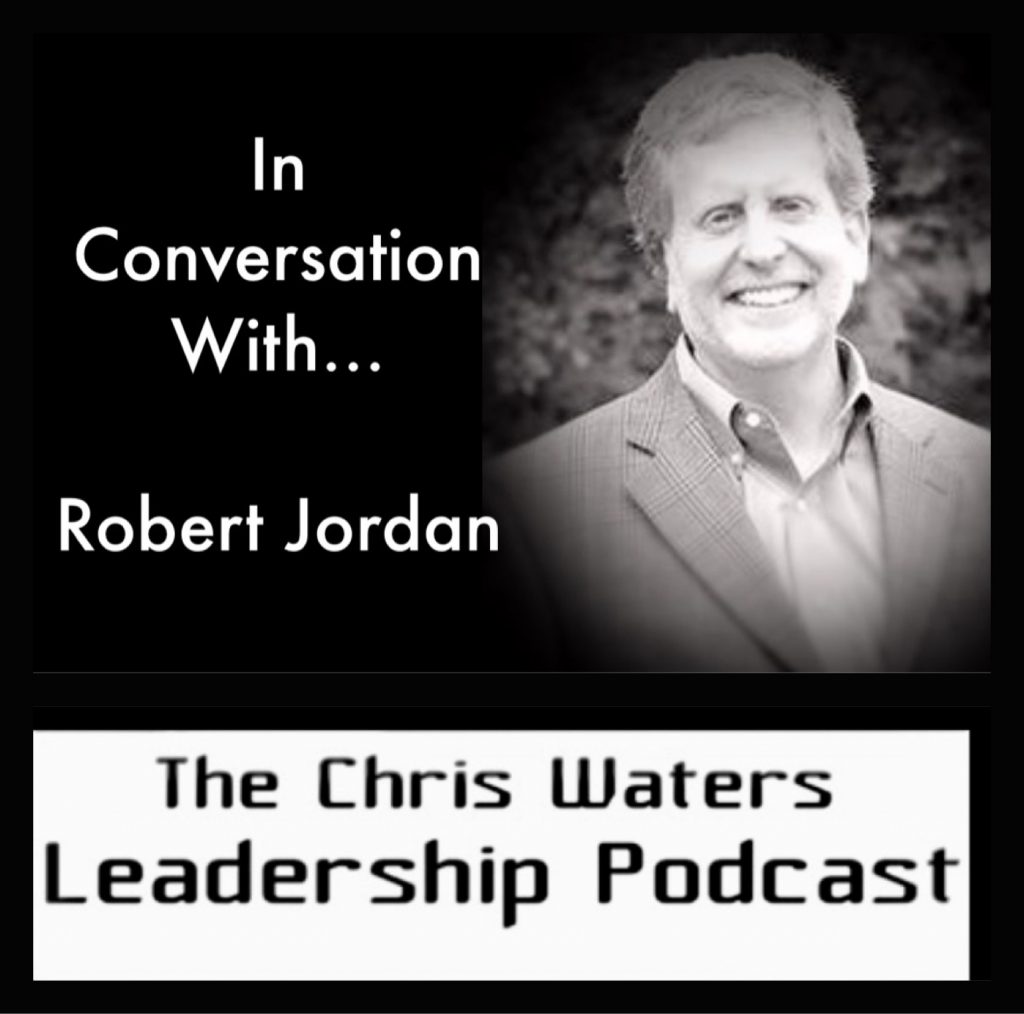
Welcome to the transcript of our discussion on the To Lead is To Learn Podcast with Robert Jordan.
In this episode, S1:E09, I sat down with Robert Jordan, CEO of InterimExecs and co-author of the book Right Leader, Right Time: Discover Your Leadership Style for a Winning Career and Company, to discuss:
- His leadership journey
- His leadership approaches
- His leadership lessons
Whether you’re here to revisit your favourite parts of the conversation or to read through the insightful dialogue for the first time, I hope this transcript provides an easy-to-read format of our engaging discussion.

Want To Listen Instead?
Click on the links below to go directly to the podcast episode on the relevant platform:


Don’t forget to subscribe to the To Lead is To Learn Podcast for more in-depth interviews with leading experts in the field of leadership as well as detailed explorations of leadership ideas and approaches.
Key Highlights From This Episode
The insightful lessons and poignant leadership practices Robert shares with us are:
- The Evolution of Employment and Leadership Models: Robert highlights the shifting landscape of employment, emphasising the transition from traditional notions of lifetime employment to a model characterised by “tours of duty” and diverse career experiences.
“Well, the world… is a very different place from the way our parents and our grandparents were employed… large corporations… lifetime employment… That ship has sailed… the way that work is organised now… we each have kind of tours of duty… many different experiences.”
He underscores the emergence of project-based leadership as a response to this evolution, recognising the need for adaptability and flexibility in navigating modern work environments.
- Specialisation and Cross-Pollination in Leadership: Robert discusses the evolving nature of the leadership roles within the modern world, where traditional career paths are being replaced by project-based, fractional roles.
“This phenomenon of interim executives… exists all around the world. It used to be more undifferentiated… an expert leader could go into a variety of industries and roles and be successful.”
Leaders are now encouraged to specialise and seek cross-industry experiences, moving away from the idea of being undifferentiated experts. This shift highlights the value of diverse experiences and cross-pollination of skills, enabling leaders to adapt and excel in varied environments.
- The Four Leadership Styles: Robert summarises his four distinct leadership style model which involves: fixer, artist, builder, and strategist. While everyone in an organisation embodies elements of all four, they have a dominant type.
“So, the 4 are fixer, artist, builder, strategist… Builder, now I know everybody in the organisation is a builder. We love being builders. We mean something a little more specific here, which is the kind of energy that can take the small teams, small set of client relationships, new product, new service… The final style strategist, this is the leader at scale…that kind of leadership energy is very different from fixer, artist, and builder.”
Each style represents a unique leadership energy, and they are suited for different contexts. The fixer is adept at resolving immediate issues, the artist thrives on creativity and innovation, and the builder excels in cultivating small teams and new initiatives. Conversely, the strategist embodies leadership at scale, navigating complexities within large organisations. Understanding and embracing these diverse styles is essential for effective leadership across various organisational contexts.
- Specialisation and Complementarity in Leadership: Robert explains how exceptional leaders excel in collaboration due to their confidence in their own leadership style and recognition of others’ strengths.
“…one of the differentiators…is that exceptional leaders tend to collaborate far better than average leaders. And we think the reason for that is because if you’re more confident in your own style and knowing exactly where you are best applied, then it’s easier to acknowledge other people around you in their own genius…”
By understanding their own strengths and areas of expertise, they can better appreciate and leverage the unique talents of those around them. This awareness fosters a culture of collaboration, where each individual’s genius contributes to the collective success. This complementarity is essential, particularly for leaders driven by creativity, as it harnesses diverse perspectives and fosters innovation.
- Artist Leadership Style: Robert underscores the importance of embracing the unique energy and approach found in artistic leadership. He advises against succumbing to external pressures to narrow focus or limit creative exploration. Instead, he highlights the necessity for creative minds to thrive amidst distractions and varied pursuits.
“If there’s ever anybody around you in your life that says, gee, Chris, you really ought to focus more. You should stop doing all this other stuff. You need to ignore that advice, forever. There’s just something about the wiring of artist energy that needs distraction in order to succeed, that needs to look away from one canvas to the other canvas at a time.”
Through his perspective, he emphasises that for artistically inclined leaders, success often emerges from the ability to navigate multiple endeavours simultaneously, embracing the diversity of their creative expression.
- Integrity and Accountability as Core Values: Integrity and accountability are paramount values for Robert and his business, placed even above commercial success.
“For us it just became the absolute rock-solid foundation of what we were gonna do that we had to be with people who were in integrity.”
This focus on integrity ensures trust and reliability in all business relationships. He explains how these are so important to him and his business, that he has even severed relationships with clients and executives who have fallen short of this level of integrity. Highlighting the importance of operating with unwavering standards.
- Reflection and Learning from Failure: Robert underscores the importance of embracing failure and reflecting honestly on mistakes as a key to growth, and effective leadership. Sharing his experience with his initial business venture.
“I realised, well, we’re the only magazine in the world doing this… I wasn’t completely wrong here. I was a rookie. I was naive. I’d made mistakes running out of money, but there was something here.”
By acknowledging his errors and learning from them, he illustrates the value of continuous improvement and the resilience needed for both leaders and organisations to succeed.
- Meditation and Centring for Effective Leadership: Robert advocates for daily meditation or pauses as a means to centre oneself, manage distractions, and enhance creativity and clarity in leadership.
“Start with 90 seconds, to just be in a quiet place and to notice your breathing. Because you will see within 90 seconds to 3 minutes that something is changing inside of you.”
This practice helps in maintaining balance and focus, which are essential for effective leadership and clear decision making, especially in today’s fast-paced and often distracting environment. This practice also supports, and even encourages, creative thinking which is vital for both problem solving as well as organisational resilience in the face of challenging times and enforced change.
- Embracing Authenticity for Effective Collaboration: Robert emphasises the importance of authenticity in leadership and encourages leaders to embrace their unique leadership style. He suggests that understanding one’s own wiring and appreciating the diversity of styles within a team can lead to better collaboration and performance.
“For people who work with you to know of your creative and artistic ability, how that is going to express itself in an organisation should be a good thing.”
This highlights the value of authenticity in fostering a culture of acceptance and collaboration. When everyone, at every level in an organisation, embraces the differences in approach, the strengths each individual brings, and how these can be encouraged, celebrated and utilised within a team, can lead to more successful and effective collaboration.
- Utilising Resources and Seeking Support: Robert underscores the abundance of resources available to leaders facing challenges in the modern age. He advises leaders to leverage coaching, consulting, and other tools to navigate difficult periods and enhance their leadership effectiveness.
“You have more resources at your beck and call than you probably know… Leadership was a more lonely endeavour before, and it does not need to be that way.”
He highlights the importance of seeking support and utilising available resources to overcome challenges and drive organisational success. For example utilising the power of coaching to help leaders to maximise their potential and overcome challenges and barriers to success, as well as utilising consulting services to bring external expertise in for training purposes, or to add missing skill sets to internal teams.
- Establishing Rituals and Boundaries for Work-Life Balance: Robert acknowledges the challenges of maintaining a work-life balance, especially with remote work blurring the boundaries between work and personal life. He suggests implementing rituals to create separation and establish boundaries between work and leisure time.
“I’m a big believer in ritual… We need structure. …we humans, we get we get our freedom out of structure, not the opposite.”
His own practice of shutting down work-related activities on Friday evenings serves as an example of how rituals can help maintain this balance, underscoring the significance of establishing routines and boundaries to preserve well-being and productivity.
- Navigating the Impact of AI on Organisations: Robert highlights AI as a major challenge facing organisations, emphasising its transformative potential and the uncertainties surrounding its impact. He draws parallels to the early days of television, suggesting that AI’s influence is still evolving and its implications for creativity and productivity remain unclear. While acknowledging the apprehensions surrounding AI, Robert also expresses optimism about its potential to augment human capabilities and personalise experiences. He envisions AI as a trusted resource that understands individual preferences and assists in decision-making and task execution.
“My hope and prayer is that it’s additive… That the way that the AI is developing is such that it becomes a trusted resource for you.”
His perspective highlights the importance of embracing AI as a tool for innovation and efficiency, while also recognising the need for ethical considerations and continuous adaptation. He also underscores the significance of leadership in effectively harnessing AI’s potential within organisations themselves. He emphasises the need for leaders to actively engage with AI technologies and integrate them into strategic decision-making processes.
“And again, I think that this is a challenge for leadership… I think this is revolutionary.”
This underscores the role of leaders in driving organisational change, fostering innovation, and ensuring that AI technologies are deployed responsibly and ethically to maximise their benefits without ignoring the importance of human creativity and ingenuity.
- Continued Professional Growth and Legacy: Robert articulates his commitment to ongoing professional development and contribution, expressing a desire to continue his work for the next two decades. He rejects the notion of retirement and prioritises remaining in his “highest and best use” to create value for organisations and individuals.
“I hope I’m of value, for a lot of organisations and executives, and my own team.”
Highlighting the importance of lifelong learning and purposeful engagement in one’s career journey. He also identifies the enduring impact of concepts like the “red team” approach, which he introduced a decade ago. He emphasises the importance of maintaining high standards of integrity and accountability in organisational practices, ensuring that his legacy is characterised by meaningful contributions and enduring frameworks.
“Regardless of who owns, or is running the organisation, I think that’s gonna be something that’s going to endure.”
Underscoring the significance of taking pride in your work, having a lasting impact and creating a legacy to be proud of through innovative ideas and principled leadership.
Full Transcript of this Episode
Enjoy the full transcript below!
Chris (Host)
This is to lead is to learn. In this very special episode, we will be talking to a real-life leader about their experiences of leadership and any thoughts and visions for the future.
____Introduction Clips____
Chris
On today’s episode…
Robert
Well, the world, you know, is a very different place where your plan is to dominate a country…An organisation which is on the brink of failure…And what they have is market domination on the brain…There are different ways of operation, but my team would go nuts if that was an endless flow. That’s the polite way of putting it…You know, they think I’m crazy at points and I think they’re crazy…
Chris
…How did you go about dealing with that?…
Robert
…The first order of the day is intense listening….It’s not easy in the beginning. It’s easy to say. It’s very hard to do…There’s a personal relationship going on there. There’s trust. That’s very hard if you feel threatened…That makes perfect sense to me….We don’t wanna pigeonhole anybody, but they don’t have the results to back it up like an exceptional leader….That’s not easy to do because the world seeks to distract you.
____Main Discussion ____
Chris
Without further ado, here is Robert Jordan, the CEO of interim execs, and the co-author of the book, Right Leader, Right Time: Discover your leadership style for a winning career and company.
Chris
My first question is every leader has a story of how they reach their current level. Can you give a brief summary of yours?
Robert
Thanks, Chris. Mine is the, uh very, would be one of the very entrepreneurial ones. I was in graduate school in the US and thought up an idea. This was years ago before the commercial Internet, before the world wide web, and dropped out of school to start a magazine, a consumer magazine that talked about online services and the Internet. It was a magazine that sold all around the world. The only problem was we were 5 years before the actual launch of the world wide web, which, as you know, was invented by one of, one of your countrymen. Anyway, but so did the magazine for a number of years.
When the World Wide Web came around, I could do no wrong and it put me on a list in the United States of the 500 fastest growing businesses. So, started not so well, finished up great, ended up selling it to a big publisher. And, then I started taking on a very strange job title in the US, being an interim CEO for early-stage tech companies. And eventually formed an organisation called interim execs, which is a global matchmaker around the world between organisations that have a senior leadership need, a CEO, CFO, CIO, and that’s what I do now.
Chris
You founded your current organisation that you mentioned, Interim Execs, which is described as being leadership on demand. Can you explain what you mean by this, and what led you to identifying the need for this sort of an organisation?
Robert
Well, the world, you know, is a very different place from the way that our parents and our grandparents were employed. It used to be that, you know, you would finish your education, whatever that looked like, and you would apply for a job. And at most companies, you know, you would think, gee, could I be here the rest of my life? You know, there was an idea with large corporations of lifetime employment, and that ship has sailed.
Right? That ship has sailed around the world, and really the way that work is organised now is much more that, you know, you and I, we each have kind of tours of duty. And that in our careers we’re going to have many different experiences. And so, that same logic has hit the c-suite, has hit leadership of companies around the world, which is not only what led to the rise of this idea of leadership on demand, project based leadership. But also led us through research because we’ve been approached by about 7,000 executives from 50 countries. And so over the years we developed ranking, and scoring, and screening to come to this idea; what is the top 1 or 2 percent of leadership look like?
And I know we’re gonna talk about this. That’s what led to publishing a book called right leader, right time.
____Break____
Chris
Through your time, what’s the biggest challenge that has been faced by leaders within the organisations?
Robert
Sorry, Chris. Could you repeat the beginning of that question?
Chris
So, within your time working with organisations under Interim Execs, what has been the biggest challenge faced by leaders that you’ve seen?
Robert
Well, we get, we receive phone calls from organisations around the world that face a myriad of challenges. Some of these are pure crisis. An organisation which is on the brink of failure. And perhaps it’s too late, but they need help and they finally come to a decision that they’re going to take on an outside resource.
In most cases, I would call it more of upside fuelling a need, that someone has developed a new product or service, and the current team just doesn’t have enough firepower to fully capture the opportunity. But everything you can imagine that occurs in business, we get those kinds of phone calls.
Chris
I mean, how do you go about navigating one of those? Let’s say that they don’t have enough firepower, as you said, within their leadership team. How do you go about dealing with that?
Robert
Well, if you wanna take an example, you know, say a company, for example, has a new product to launch and the team has not done that before. The advantage to the modern world, the way things are organised, you know, as you and I are recording this is, there are now these resources, these executives who’ve had these remarkable careers and track records in more traditional employment, right, working for large companies where they’ve had a lot of success. They’re not retired, but they got a little bored, you know, and they don’t need the corner office for the rest of their lives anymore. They’re not driven so much by money anymore. It’s not this need for a paycheck every day. It’s this drive to quickly kind of hit the ground running with an organisation that has a need.
So, you have this kind of executive talent, which is now out there. You know, for example, one of our executives, he’s the former president of Pepsi. And so, you know, you have organisations that are launching new consumer products. And if they’ve never had that experience of gee, how do you do something where your plan is to dominate a country. Right? To, you know, you have a new beverage, you have a new food product. You know, how are you gonna do that if you haven’t done it before? Well, it could be that that expert leader coming in on a project basis, not applying for a job, not going to be there permanently, but that a project can be defined so that you have that opportunity, that potential for more success faster.
I can give you an example, you know, examples on the other side of disaster are all around us. You know, as you and I are recording this Chris, crypto has gone through an implosion. And the leading example, the leading marketplace, FTX, filed for bankruptcy about 3 months ago. And immediately on filing for bankruptcy, and that involved about a 100 entities, the US courts appointed an interim CEO. And now that was in the case of someone who was veteran in crisis.
And it’s not a surprise that the credentials of that CEO going into FTX, prior to that, he’d been involved in Enron, which was a huge blow up of an energy trading company. But that was the wiring of that executive to go in and be that kind of resource, on the spot as needed.
Chris
That’s interesting. That sort of leads me on to my next question, which is, what do you look for within your, sort of, leadership team at Interim Execs when you’re about to employ someone? What sort of skills, knowledge, experience do you actually look for? Is it specific to the role, or is it, do you just have just a team and you’ve already selected these people before you get a job that comes along?
Robert
Chris, it’s a great question. It used to be, and this phenomenon of interim executives, project based, or fractional executives exists all around the world. It used to be more undifferentiated, which is to say that an expert leader could go into a variety of industries and roles and be successful. And while I still believe that is true, because this is matured as its own category, it’s not the same as permanent search, it’s not the same as consulting.
We do see more specialisation and, in some cases, getting very specific. So, if you think, for example, in any country of a regulated industry, you know, where there’s more government control around it, that tends to require more specific industry expertise from the executive coming in.
So, for example, in most countries insurance is a highly regulated offering. And so, if for example, an insurance company shows up, they’re going to need somebody who already had background, already understood how to deal with regulators. But in a lot of categories, that’s not necessarily the case.
And, you know, what we’ve noticed is that for most executives who are challenged by this, who’ve had exceptional traditional careers and then go into project-based leadership, they’re seeking new industries. They’re seeking this kind of cross-pollination to take their experience from one realm and take it into something completely different.
Chris
It’s good that they’re branching out. What sort of transferable skills do most leaders, in your opinion, have that can go from one industry to another industry? What is it, that they have in their skill set that allows them to move from one industry to another?
Robert
Well, the core of their leadership skills is not going to change based on the industry that they’re going into. I would say though that because, you know, in terms of the research we did for the book right leader, right time. We very much differentiate between 4 different leadership styles or forms of leadership energy. We give them labels which are fixer, artist, builder, and strategist. And so, we see those as very distinct kinds of leadership style. And within those styles, there are different ways of operation.
So, fixer for example, this is the energy that loves going into the burning building time after time. This is the person who is expert at turning around failing organisations. Well, that playbook, you would think going into the burning building, oh, it’s action, action, action. Actually, for most fixers going into companies that are in crisis, the first order of the day is intense listening. And that doesn’t mean listening to the board of directors. I mean, it is listening to the board and the management team. But in most cases, companies that are in crisis, they’ve ignored a lot of people inside their own organisation. And so that kind of leadership style, you will see a leader going in, and the first thing they’re doing is going down onto the shop floor. They’re talking to the people running the equipment, actually making the product. They’re talking to the administrative assistants and low level staff who may have been ignored by management for years.
So, you’ll see that there’s a different kind of playbook based on style. If you wanna know commonalities, we would say, for example, that exceptional leaders who excel in a particular kind of leadership style tend over time to double down within that style. They tend to reinforce more. If you are wired as what we would call artist leader, standout example in the world today is something like Elon Musk, who is driven by this creative drive. Artist leaders see the world as a blank canvas or a piece of clay to be moulded. If that is your dominant kind of wiring, then what we tend to see is, the more confident you become in your career, the more accomplished, the more over time you will tend to reject what is not for your highest and best use.
That’s a phrase we use a lot in the book, which is to say that, you know, for each of us as we go through this career journey, it’s not easy in the beginning. It’s easy to say. It’s very hard to do. But then over time, you come to discover yourself more and more, what you love, what you’d like to do, what you’d least like to do. And exceptional leaders tend more and more over time to gravitate towards that, to double down within their own particular style of excellence.
Does that make sense?
Chris
Yeah. It does.
____Break____
Chris
In terms of your book then, right leader, right time, discover your leadership style for a winning career in company. You said that you have 4 different types of leader. You’ve mentioned 2, which was the artist and the fixer. In terms of the 4 different types, can you give a quick summary of the other 2?
Robert
Yes. So, the 4 are fixer, artist, builder, strategist. And for short, at the end of the book, we refer to it F-A-B-S or fabs. We’ve also launched a free 3-minute assessment. It’s called fabs leadership assessment, which is at the website for the book rightleader.com.
So, fixer and artist, we talked about. Builder, now I know everybody in the organisation is a builder. We love being builders. We mean something a little more specific here, which is the kind of energy that can take the small teams, small set of client relationships, new product, new service, it’s very nascent, it’s very new. And what they have is market domination on the brain.
They have this this fixation with getting to a point of dominance in a market, of scaling. And what you tend to see with expert builders is that once they have achieved that, they may get bored. You will see that person, then they could rotate off the product, rotate off the team, rotate off those client relationships, to go seek out something else which is not yet at scale. This doesn’t, sometimes this means, you know, oh, we’re going for world domination. But in a lot of cases, it doesn’t.
You know, if for example in your town, there is a home builder, a real estate developer, and everyone in town knows them. And they’re not known in any other towns, just your town. That is, that’s a sign of someone who is fixated on market domination. And they’ve defined their market in a certain way, which is they’re gonna be dominant there.
The final style strategist, this is the leader at scale. This is the person at a complex or vast or very large organisation and that kind of leadership energy is very different from fixer, artist, and builder. The kind of language strategist leaders use refers to loyalty, to being mentored, to mentoring other people, to being cross trained in various functions, to longevity within an organisation.
But one of the leaders we inter…we interviewed a lot of leaders for the book. And one of the people we interviewed, she had been the Undersecretary of the Department of Defense, in the United States. That’s over a million people. And to hear the way she would describe leadership, in terms of systems of systems and having influence at a level that on the surface you would say, oh, that’s just a one degree change. But then over time, you could see this massive shift in an organisation. That’s the kind of language you hear out of strategist leaders. Strategists, we could have called conductor or captain or pilot. But it’s a very different energy, you will not hear most fixer, artists or builder leaders talking the same way.
And most, if you’re identifying more with fixer artist builder, it’s highly likely you’re with a team that has 5 people, 10 people, 50, maybe a 100. But there’s a personal relationship going on there. There’s trust between you, which is how your leadership expresses itself. And for the strategist leader, there’s a different set of tools you have to rely on.
Chris
Are they all, like, equally spaced, or would you say…because you mentioned there like, 3 of them appear to be almost grouped together, but strategists, they’re separate, they seem very separate. Is that right to infer that?
Robert
Well, we don’t wanna pigeonhole anybody into saying, oh, you’re just this one thing. I don’t think that’s the case. I think that for a lot of successful exceptional leaders, there is a dominant style and there may be a really strong secondary.
For sure, what I’d say the opposite is not true, which is there is no leader who is perfect in all aspects, companies, cases. It’s just not the case. And, you know, Chris, it sounds obvious to say that. What I’ll tell you, that among the 7,000 executives who’ve shown up on our proverbial doorstep, the majority are experiencing careers that we would describe as okay, but not exceptional. And if you had to rack that up to, one reason, we would say it’s because of the attempt to be all things to all people. And it doesn’t work. But if you point that out to someone, they’ll deny it all day long, but they don’t have the results to back it up like an exceptional leader.
And by the way, that’s another one of the differentiators which is that exceptional leaders tend to collaborate far better than average leaders. And we think the reason for that is because if you’re more confident in your own style and knowing exactly where you are best applied, then it’s easier to acknowledge other people around you in their own genius. And to realise that if you’re on a team, that’s how you’re all going to be more successful.
That’s very hard if you feel threatening or you’re not in what we would say your highest and best use. That’s very hard to actually collaborate with somebody else authentically and allowing them their genius.
____Break____
Chris
I did your diagnostic myself, and it only took a couple of minutes. And I came out as an artist. So, if I was someone that you were working with, what piece of information or advice would you give to someone like me to maximise my potential?
Robert
Wow. That’s a great question, Chris, and I’m so appreciative that you took the assessment. And it does not surprise me that you came up with artist as your dominant energy. And again, this is not to say all of us are…we bring all our capabilities to bear in our work, and if you’re a leader in your leadership role, you’re using all of your toolkit.
Right? So, in your case, to say that there is this dominant artist energy, that makes perfect sense to me. Because, for example, almost by definition, since you are doing a podcast, that is a creative outlet. That’s a creative pursuit. Because you teach Physics, that is…it’s just something that is an expression of creativity. It is both rules based, and at the same point, right, there’s a part of you, your mind, that takes a concept and keeps on going with it. Right? You know, you and I, before we started recording, we’re talking a little about quantum entanglement, of all things. And it’s just fascinating because even, you know, the great Albert Einstein, he was bothered by it, he could not…he couldn’t fully wrap his mind around something that did not conform to the way that that everyone believed the universe was organised, you know, up until the 19 twenties. Right?
So, the advice for artists. Well, first of all, the advice for any one of these styles is keep going. Keep doubling down. That is hard to do. That’s not easy to do, because the world seeks to distract you. And especially for young people when they’re coming out in career, it’s not an overt message, so much as something more subtle, which is this idea of commoditising, and that it’s hard to necessarily show genius.
I will tell you, Chris, because you and I are wired similarly, I’m very strong artist. I’m terrific at generating ideas on my team, but my team would go nuts if that was an endless flow. And so, what I realised and the success, for example, of our business in our execs is because I’m surrounded by people who have very complimentary energies. That’s the polite way of putting it. What I say with them, I say, oh my god we’re so opposite. You know, they think I’m crazy at points and I think they’re crazy at points. But you need you need that complementariness, you and I especially, because we can’t turn off the creative drive.
The way one of the…we interviewed a number of psychologists, organisational psychologists, for the book to ask, you know, are we crazy? What do you think of this model of fixer, artist, builder, strategist? And one of the psychologists we interviewed, he said, you know, you just need to be spiky in a couple different ways. What do you mean by spiky? And he said, well, if you looked at a graph on the screen or a piece of paper and it showed all of the traits and skills and capabilities you need from a team, regardless of what they’re doing, teaching in a school, putting out a car, whatever it is. But if you look at across all the range of abilities you need on a team, you and I only have to be spiky in a in a few certain ways to be accretive and additive to that team.
We’re not going to be spiky. We’re not gonna be exceptionally high in ability across all traits. That’s just impossible. And what that team needs, is this complementariness across all these different kinds of spikiness to succeed.
____Break____
Chris
When you’re looking at diagnosing someone’s strength area, whether it be, let’s say, artist or a builder, what is the diagnostic actually looking for when you’re answering those questions to help identify which area you’re in?
Robert
Well, do you mean that in general or specifically, like, if a company showed up and said, hey. We need, we’re in trouble. We need turnaround. We need a fixer.
Chris
If we’re looking at a leader trying to self-diagnose themselves using your diagnostic, for example, what have you got programmed into your diagnostic to help identify?
Robert
Wow. This is another great question. There’s a number of things we are testing for in the assessment. And there are a number of tools in the world that are wonderful and they’re, you know, as the statisticians would say, they’re validated. You know, because they’ve been used by so many hundreds of thousands or millions of people.
We are much more at the exploratory stage here. And so I’ll tell you some things we believe that are being tested. OK? So, for example, if you think you’re wired strongly with fixer energy, this turnaround, you’re always the trouble-shooter on the team. You need, you know, you need to go into the toughest situations.
We think that’s a linear style. Linear meaning that you tackle one company at a time, one crisis, one, you know, you you’ll see for example, in large corporations, they’ll put a trouble-shooter into a country where they’re having the most amount of problems and no one else could solve it. You will tend to see that that fixer style, we believe is linear which is to say one organisation, one crisis at a time.
So, for example, it wouldn’t come as a surprise that the leader put into FTX, right? The crypto exchange which has blown up and there are at least a million creditors around the world. That CEO is not working on any other project, any other company. He is 24/7 for a number of years going to have to figure out where are the assets, where’s the crypto, where’s the money, and how to get back as much as possible to those investors?
The flip side is, for example, Chris, you and I, we are wired with Artist Energy. We would say that for artist energy, it’s parallel. And it’s we could almost define artist with one question. For any of your listeners, if I ask you the question, do you have to work on more than one project at a time? If you’re jumping up and down saying yes I do, you have artist energy in you. Literally we got that reaction from a number of leaders we interviewed. We interviewed 1 artist leader and here’s the list of his resume. He was running, he had launched and grown a marketing services company with 200 employees. At the same point, he wanted to help Rwanda get over the genocide from 20 plus years ago. And so, he had launched an entrepreneur training program in Kigali, in Rwanda, and he made a 10-year commitment to go every single quarter, and he had a program training 100 of entrepreneurs. Right? At the same point, he was the chairman of the board of the leading opera company in Chicago and on and on and on. And when we asked him, do you need to work on more than one thing at a time? He’s jumping out of his chair saying yes, yes, yes.
Now I know of at least 2 things you do, Chris. You teach physics and you do a podcast, is there anything else.
Chris
I coach football. I yeah. I run training programs for leadership, so I try and fill my time with all sorts of different things. So, this is definitely resonating with me jumping up and down.
Robert
Yeah. So…and so the further message for you is keep going. You need to do this.
If there’s ever anybody around you in your life that says, gee, Chris, you really ought to focus more. You should stop doing all this other stuff. You need to ignore that advice, forever. There’s just something about the wiring of artist energy that needs distraction in order to succeed, that needs to look away from one canvas to the other canvas at a time.
And I mean pure artist you know like Monet, you know, everybody’s seen haystacks at various museums. He would work on 15, 20 haystacks canvases kind of at the same point depending upon how the light was fading, you know, in a sunset. He literally could shift focus and would become a new painting every 15 minutes. He would…it would require a new canvas.
____Break____
Chris
Going back quickly to Interim Execs, your business. You list integrity and accountability, as two values which underpin everything. And in particular, you actually mentioned it’s above commercialism. So why did you choose those particular values to focus on?
Robert
Well, you know, this is reminding me, there’s the famous author, Ellie Wiesel, and, you know, he survived the concentration camps. He wrote a number of books. One of them was called night. And, there’s a quote in there from him which says, it says to the effect of ‘for each one of us, there is a path’. There’s kind of one true path for us. And if you know that and you can kind of swear fidelity to it, you’re gonna have a successful life. And my cofounder and business partner and co-author, Olivia Wagner and I, part of the reason of coming together to grow a business like Interim Execs is this…answering this question for yourself of what do you stand for? What do you stand for?
Well, in our case, we realised we were taking on a lot of risk because when an organisation shows up and they want our help, we’re writing a contract. But we’re not actually the ones doing the work. We’re an agent and the people doing the work, the executives going in, well, you’re placing a lot of trust. You’re placing trust in the executive. You’re also placing trust in the organisation that everyone is gonna do the right thing.
And so, it just became for us the most important thing which is, are we operating with integrity and are we dealing with people who have integrity, who we can trust? This sounds so obvious. Right? Because, you know, everybody thinks, you know, it’s oh, of course, I do everything right. Well, yeah. But, you know, you can look in the news on any given day and you can see people who are acting without integrity. Generally, they’re getting charged with crimes or no surprise something has blown up, because they do not honour their word because they cannot be trusted. And so, for us it just became the absolute rock-solid foundation of what we were gonna do that we had to be with people who were in integrity.
And I’ll tell you even with that strong foundation and conviction, we have seen breaches of integrity, rarely, but we have seen them. And it’s not that you can control other people, we can’t. But we can control exactly how we respond, and it makes it comforting and gives a lot of clarity to an organisation when everyone simply knows this is what we stand for and what we will not. And we had a case with an organisation and an executive who absolutely, behaved without integrity, and so it didn’t matter how much money we were receiving. We fired both of them the same day.
There was no question of what we were going to do.
Chris
But would you say that integrity is one of your personal values as well as your businesses? It’s something that you hold dear yourself?
Robert
Yes. Absolutely.
And this is not, you know, Chris, it doesn’t, you know, the example…you know, there’s a program around the world called landmark education and they’re very big on, integrity. And I’ll give you a small example.
So, you and I had set a time to be together, for our conversation. And we had that time set and it was on our calendars. And it’s a promise.
It’s not a big thing, but it is a promise that you and I made to each other essentially. Right? And so, the minute comes for us to both get on the call. And if we’re both on, and we were both on, well, we’ve met that promise and so I’d say, we’re in integrity on this.
Now had I been late, 2 minutes, 3 minutes, whatever, I’m out of integrity. So, I made a promise to you and that’s it. Now does it mean I’m a bad person? No. I don’t think so. I hope it doesn’t. But in that case, I’ll tell you absolutely what I would do because I have been late for things, rarely, but occasionally. What I’m gonna do is apologise because it’s a break in a promise that I made and either to you, or to myself and the rest of my team. I’m making a new promise, which is I will be on time early, it’s not going to happen again.
But, you know, in our lives in small and large ways, this plays out for all of us in this way.
Chris
What other personal values do you hold then, particularly in your leadership?
Robert
Well, this may sound a little strange, but I think there is an underpinning of love that comes through, you know, with the people who you are around in the in the sense of having this mutual respect and joy and being able to, work together. And, I’m not going to be involved in organisations, and clients, and situations where I think, that those people would not be, you know, that there are good outcomes that are gonna be happening for all of us.
Now my clients, they come and go. Our executive relationships tend to be enduring for years. But I think that, you know, it’s…I’m not talking about being unprofessional, but that I think there’s this element that we should acknowledge in terms of respecting each other and being in in joy joyful relationships with each other.
Chris
How would you say the people who follow you experience this then? So, you pointed out that love is one of the things that underpins your leadership. How would they experience that in a day to day sort of…
Robert
Oh, now now you’re gonna…now I’m gonna sound like I’m bragging because, you know, I have people I work with who will say I’m the best boss they’ve ever had.
I’m not gonna be the guy who’s the…when I was younger and far more insecure, in my first company there, you know, I had frantic moments in ordering people around because I had no money and it was desperate, and we had to make a profit and I’m not wired that way anymore. And, I’m not gonna be that that, ogre.
And, you know, hopefully there’s kindness that’s gonna permeate no matter what. You know, we have staff and I don’t necessarily think it’s their highest, aspiration that, you know, they may be doing what they’re doing with our team. I’m gonna go celebrate them for doing what they’re great at.
I have a colleague who’s a professional actor. She’s a remarkable actor. So, I’m gonna support her. I see her in every play she’s in. I want her to be, you know, a major lead on multiple, streaming, you know, shows on television and all that. That’s when I’m gonna go celebrate. I’m not gonna go insist because we’re in this organisation that she has to, embrace what we do and that that’s the only thing that’s gonna go on in her life.
Chris
That’s really interesting, actually.
Robert
I’m not sure that…and I’m not sure that I would say that’s a way that I would encourage any other leader to be.
But that is, you know, that’s what I feel. And, you know, we’re a private company though. We’re not…I don’t know if you get the luxury of that mindset. You know? If you’re a public company and you’re reporting to your shareholders and, by God every quarter better be better than the last quarter, I’m not sure they put up with that.
But I’m not a public company.
____Break____
Chris
In terms of…you said when you were younger, and maybe less experienced, you were a little bit more autocratic and, like, commanded people around. And as you sort of became more experienced, you became less so. Would you say that that’s something that’s common to most people who take on leadership positions when they’re inexperienced? They’re more likely to be autocratic.
Robert
It’s a great question. I think insecurity breeds a lot of behaviours that, you know, perhaps we wouldn’t, you know, necessarily be pleased with. I hope for myself, you know, that my career journey and leadership journey is one of getting better and better. Or put in another way, it better be. It has to be. Or I’m not learning from it.
One of the phrases, quotes we put into the book, a minister in the US who I never knew him personally recorded programs, but he had the saying, which is ‘just because you have a song to sing, doesn’t mean you don’t have to learn how to sing it’. So, we’re each on this journey, we have this mission and, you know, I’ve daughters and I will tell them, you know, you’re on this great journey here and it’s gonna be discovery and you don’t get all the answers instantly and you don’t necessarily get them early. Hopefully, you get them along the way, but that’s gotta be what the joy of the journey is about.
What do you think about that, Chris? I’m gonna put you on the spot here, buddy.
Chris
I generally think that a lot of people who get put into leadership positions, they see the promotion as the culmination of the journey rather than the beginning of one. And I think, they sort of become a little bit too self-centred to start off with. Over time, I feel that they relax into it, and they become a little bit more secure as you mentioned. So, you know, I definitely do see a lot of that around. Definitely.
Robert
I mean, clearly, from what you have chosen as your career, because you are a coach and you are a teacher. You know, you’re absolutely aiming yourself at helping people earlier on, to develop and develop well. Right?
Chris
Yeah. I think one of the things that you actually mentioned there about leadership is, you have to continuously be willing to learn. You’re always gonna improve as a leader, definitely.
Robert
You know, a year or 2 ago, the founder of Salesforce, Marc Benioff, he bought, time.com. You know, there used to be Time Magazine, and I don’t know if they publish the magazine anymore, but it’s a big news website. And somebody asked him, why did you do this? He bought time.com for, like, $200 milion and he hadn’t been in the market to become, a publisher, and he kind of just… it sounded like on a whim, he decides to do it. And his answer was, I have a beginner’s mind. I thought that’s a great thought.
And you can’t take anything for granted in business, I don’t think. I don’t take anything for granted about our business. For example, the fact that it needs to evolve. And the more that it does and we’re blessed. I’m blessed with all of this remarkable leadership talent around me, you know, from around the world. And I will say, I absolutely wanna have a beginner’s mind here. I don’t want to think, well, you know, because something was this way in the past, this is the way it always has to be in the future. I don’t think that’s healthy.
Chris
So, if you were to put yourself in the shoes of your followers when you were inexperienced and experienced now, what would it have felt like to follow your leadership then, compared to what it feels like now?
Robert
Oh, God. Help them. My God. I started out as an incredibly enthusiastic but unskilled, ignorant, entrepreneur. I mean, the way I put it, I started out in magazine publishing, and I had a great idea. I mean, I was the first person in the world that thought up the idea of publishing around online and Internet. But I tell you, Chris, every mistake you could potentially make in business I made.
I ran out of cash. I hired one of my best friends into a role and it didn’t work. And I gotta tell you that wasn’t great, for the friendship. It just, it was trial by fire, and that was not easy on the people around me.
Chris
How did you deal with that? It’s interesting. You brought your friend, I think a lot of people would be very tempted to go into business with friends, or employ friends into a business. How did you deal with it when it so obviously didn’t seem to work?
Robert
Well, the full story of that…I mean, if from the outside, like, if somebody looks at my resume, they’d see online access magazine and they I published it for 10 years.
But the reality within it was the first two years were so disastrous that at the age of 28, I ended up…we had run out of money. And, I was walking into federal bankruptcy court in Chicago, Illinois, not personally, but on behalf of the business and having to file for bankruptcy. So, you know, try that out at age 28 of, you know, having aspirations and thinking, oh, this could be the greatest thing in the world. But now I’m walking into the clerk’s office to file because I’ve utterly failed in business. So it had no instant great solutions.
But I still remember. I mean, I remember, you know, walking in and filing. And then, for the next week, I held, what I call a pity party, with exactly one person invited. And after feeling sorry for myself for about a week, I realised, well, we’re the only magazine in the world doing this. We have thousands of subscribers. We had national advertisers, it was a real glossy magazine, with national advertisers that loved it. And around the world, this magazine sold on newsstands a higher percentage, what they call sell through, than most other magazines. I mean, there were a lot of people that when they saw it, they bought it. And that was sobering and encouraging, and kind of reviving. That I thought, you know, I did get some things right. I wasn’t completely wrong here.
I was a rookie. I was naive. I’d made mistakes running out of money, but there was something here. I ended up buying the rights out of bankruptcy court and restarting the magazine, and slowly but surely without any investor support, building it back up. But there was no instant, easy ‘oh, this is all I have to do, and everything will be perfect’.
I will tell you that one of the key things is that all the assumptions I made at the age of 26, a lot of them I changed when I relaunched and had to rebuild the team. I had just assumed things that were not necessarily true.
Chris
That takes a lot of reflection straight after a really big hit, to take your reflection and go, actually, my assumptions I made weren’t great. So, how would you advise someone to be able to take that moment of reflection and real honest reflection rather than reflection where we often tell ourselves things we want to believe, but reflection to actually go, what I actually think right now is wrong.
Robert
Well, the thing that I inadvertently did at that time is something I try to do every day now, which is to say start by just breathing.
And, it was a little after that point actually that a friend of mine who was a transcendental meditation instructor, a TM instructor, that I learned how to meditate, which in a way it’s not some huge thing. It’s, you know, collecting yourself and just breathing, noticing your…if you could just get to a quiet place and notice your breathing for 90 seconds, well, you know, that is essentially the essence of meditation is to be that observer, to have a point of, you know, to try to listen to, you know, as they say, the still small voice in you. That there is a direction we each have, there was something that I was feeling. And so, at the point of calm beyond all of the upset, I was so upset that, you know, 1st venture had not worked, was to have this moment of clarity. And, you know, even now, you know, to be asked, you know, after the book because, you know, we’ve had lots of interviews.
People are like, well, what’s the key to leadership? All of that. And I would generally say, well, first, you have to be at the centre. And we had done a book before Right Leader was called How They Did It. It was a series of q and a interviews with 45 champion company founders, as we said, from the heartland of the US. And one of the leaders we interviewed, he’d grown a company from 3 people to 2,000. And I asked him, how did you do that? And he said, you have to be at the centre. He didn’t mean a physical, you know, in charge of every decision. He meant the kind of in the core of himself. He had to be grounded. He had to be balanced.
And I think that is a key superpower, if you will, especially now because we are…among the epidemics of the world is the epidemic of distraction. And, you know, you don’t have to go any further than pulling out your phone, you know, whereas the average person does pulls it out 200 times a day, to realise what distraction is and how we’re feeding this kind of dopamine hit, within ourselves. And that isn’t good for any form of leadership. It’s not good for any form of, I think, a joyful life.
Chris
A lot of people say meditation is a real key for success. Are you someone who agrees with that?
Robert
Absolutely. Yeah. I think if people wanna look at what can be superpowers for their success, very high on the list has to be get a good night’s sleep. That’s key, more than anything else. And then also high on that list is, you can call it meditation, call it the pause you take every day. If at the beginning of your day, or the end of your day, start with 90 seconds, to just be in a quiet place and to notice your breathing.
Because you will see within 90 seconds to 3 minutes that something is changing inside of you. That, you know, the monkey brain, all of that talking noise we have, it’s never gonna stop. I’m not saying that. But there is this pause that can occur. It was funny, at some point, the Dalai Lama was quoted, you know, because he’s the Dalai Lama, right? And, you know, boy, he must just be the greatest meditator in the world. And, you know, his response was he’s distracted just like anybody else. But there is still this benefit you absolutely can get out of that.
Chris
I sort of have that pause, that sort of time just to sit and do nothing. I see that as really important towards creativity, towards all sorts of things. Just, the time you sort of clear your mind from all distractions, suddenly that’s when the great idea can pop in. You’re giving yourself space to actually let it in.
Robert
Yes. Yeah.
Thomas Edison had a little trick that he would hold some coins or keys in his hand, and he scheduled nap time for himself during the day. And it wasn’t, from what I’ve read, it wasn’t so much because he was tired. It was because this calm that would descend when he was asleep, rested, whatever, would be when he was more even more, you know, fervent with his imagination and that he wanted to always remember that and record it. It wasn’t in the middle of the hustle and bustle.
Chris
That’s when he like, that’s the keys dropping to the floor to waking back up. So…
Robert
Right. So that he could remember in the moment, ‘oh, this is the new idea’.
____Break____
Chris
In terms of leading others then, so we’ve reflected on ourselves, we’ve identified where we need to adjust, need to change. Sometimes when leading others, there are difficult conversations that need to take place. How would you advise someone who’s worried about those difficult confrontations that they sometimes need to have, the difficult conversations they need to have someone in their team, what advice would you give them?
Robert
I think that what starts with ourselves, and then hopefully permeates to the people around us on our teams, is this idea of what’s my authenticity? How am I appearing genuinely to myself and to the team?
And this is where we hope, that this new overlay for leaders and people on teams helps. Which is to say, you know, to know more about your wiring is meant to be a good thing. That it’s meant to be a validation. That the unique form of how you are at work and how you lead, is a good thing for you and it’s a good thing for everyone around you.
Now if that’s the premise, if that’s the premise that we’re really trying to help each other excel on a team or within an organisation. Well then, Chris, the more I know about you, the better. And the more you know about me, the better, and how I am wired. And so, for people who work with you to know of your creative and artistic ability, how that is going to express itself in an organisation should be a good thing. And, likewise, for me to know of the rest of the team, what their wiring is, what their particular genius looks like, is going to help us all perform better.
So, this gets to the point of what is, you know, more and better authentic collaboration. Because if I can be more confident in my own style, quirky as it is, unique, outlier, whatever you wanna call it. But the more confident I can be that this is what I am, and this is what I own, and this is how I’m going to excel. Well, for people on the team to accept me, then also that I can accept everybody else for their unique genius, because they’re not going to be the same as me. Even you and I wired as artist leader still means we are, you know, incredibly different and diverse in the ways in which we express that. So, I think that conversation and connection is enhanced the more we know about each other, in terms of leadership style.
Chris
So would you suggest that people within their leadership teams, maybe it’s all worth them doing this diagnostic, finding out exactly what type of leader they are because then they know how to manage the interactions and, you know, the strengths and weaknesses of each of the people around them on their team.
Robert
Yes. I think I think everybody taking the assessment is a good idea. I put it into the same category of other activities where we get to know each other. There are other tools, validated instruments that you can take, and they’re all going to help, for us getting to know each other. And then they’re gonna be, you know, there are team building exercises that in most organisations, people go through. And some of those can be hokey and, but I think in a lot of cases, they actually help a team to bond more.
____Break____
Chris
I’m sure out there, that a lot of our listeners, who are within organisations or have been within organisations that have gone through difficult times. I mean, we’ve all had one very recently. But during these challenging periods where they might be high staff turnover, for example. If there’s a leader right now listening that’s going through this period within their business, it’s difficult times, it’s not as easy to make money, they’ve got high staff turnover, they’re finding it hard to employ people. What pieces of advice would you give to someone who’s going through a really tough challenge at the moment leading an organisation?
Robert
Well, part of the beauty of the modern age is that there’s an abundance of resources around you. And if you’re anywhere in the Western world, there are resources around you. And even if they’re geographically, physically not close to you, they’re one Zoom call away.
You know, we represent one particular kind of expertise, which is operational, leadership going into organisations, you know, which is project based fractional, whatever. But, there are all of these other categories of resources that you have at hand. You know? So, there’s a huge category of expertise in the world, which is coaching. And I make coaching as a distinction from what is pure consulting, what is operational leadership, that has incredible value.
And so, you’re a leader in organisation. You have more resources at your beck and call than you probably know, and it doesn’t mean that you’re gonna break the bank, having to go budget for those.
That is the beauty of the modern age. You know, for people that kind of decry like, oh, everyone’s not a permanent employee anymore. You know, we outsource this function to India and this function blah blah blah, wherever. Well, the flip side the advantage of that is that so much of that firepower is available to you in an affordable way, and it did not exist before. I think that leadership was a more lonely endeavour before, and it does not need to be that way. I certainly felt it was a lonely thing when I was doing my first company, and it wasn’t going well. And even when things are going well, if you’re the solo leader of a business, it can feel lonely. I mean, that was one of my big motivations where I thought, man, this whole idea of project leadership, I wanna do it because I think a lot of people out there in leadership roles do feel alone.
They don’t need to.
Chris
One of the big changes that’s happened, particularly since the COVID pandemic, is moving online, more virtual work, people working from home and therefore not in the office. That can provide some challenges and some level of loneliness, I guess. In terms of a leader, you can’t just walk around the office and talk to members of your team. So how do you feel like that challenge is being faced in the modern world?
Robert
I think there are some changes that have become permanent as a result of COVID. You know, for example, we in our business, we’re now completely used to the fact that our conversations are always now going to be on Zoom calls or, you know, Teams or, you know, whatever tool you’re gonna use. That wasn’t an assumption we all had, prior. Prior, a lot of people would be thinking, well, you have to get on an airplane for certain kinds of meetings or events, or we’re gonna do conference calls. But it’s interesting that now because video is a 100 times what it was before, that we have a little sense of more body language and meeting people, which I think can be a plus. I don’t think it’s a replacement for people being together or in person.
I miss the fact that when my team, our team is spread out, all over the place. When we used to physically all be in one office, it was easier. You know, we wanna brainstorm, we’re gonna go in a room and start covering whiteboards with notes and all that. So, I think that there is a hybrid, which we’ve all now come to accept and this is the way that it is, and it does have advantages.
I say that somewhat reluctantly because I need people. And when COVID hit, and I was in a WeWork location in Chicago. I’ve also been in WeWorks around the world. But I was in a WeWork in Chicago with a 100 people on my floor, and the day that, Chicago, you know, kinda put itself into some form of quarantine, went down to about 2 of us for the next 6 months. It was not fun.
Chris
In terms of online meetings, and you in particular, you said you need people. I’m sure there’s a lot of people that need that physical connection with people. If someone, for example, is working from home, that really starts to then challenge the work-life barrier, really, doesn’t it? Because it’s when do you choose to clock off? When do you switch off? Where’s your commute home to defrag from work? That sort of, that goes away. So that’s the challenge, particularly for leaders who, for example, maybe have had a whole day of difficult conversations, and then suddenly their commute home is walking out of their office door straight into their home. How would you advise a leader with that challenge?
Robert
It’s a great question, Chris. And, you know, a lot of, there’s been research that when COVID hit and people started all working remotely, the productivity went up. And so, that was an instant kind of positive.
But to your point, that separation between work and the rest of your life, became blurrier for people who were constantly working from home, where they had been used to an office. And I think that is a necessary separation that is there. And what it means is there’s more of a burden, or responsibility, on the individual to put some rituals in place to make sure that that occurs.
And I can tell you, for example, I have a ritual, which is in my spare time I paint, and I’m blessed with family and lots of activities. And so, for example, on a Friday, Friday night when I’m done with work and I wanna make sure I’m not working the rest of Friday and I’m not gonna work over the weekend. I have a bit of a ritual to shutting down my my PC, my laptop, which is every app has to be closed and I’m not going to be looking at email over the weekend, and I’m not gonna look at it on my phone.
And I just know, and it’s a comfort to me, that on that Friday afternoon, whether I’m at home or I’m at the office, that I go through that shutdown. I tell myself work has shut down, and that’s it until I get back to Monday, whether that Monday work is at home or in the office.
I’m a big believer in ritual.
We need structure.
You know, we humans, we get we get our freedom out of structure, not the opposite.
____Break____
Chris
In terms of organisations then, and looking into the future, do you foresee any big challenges, big problems that maybe at the moment aren’t there, but you can see maybe they’re gonna be coming soon? And your organisation may have to, you know, adapt the way that it’s going to provide its services in the future because these are gonna become more, bigger, persistent problems that are coming in the future.
Robert
There are potentially all kinds of major challenges that are coming. At the moment as you and I are talking, Chris, I think AI is first and foremost. And its impact is unknown.
You know, it was just about a week ago that about a 1000 leaders called for a moratorium on AI development. You know, concern over where it’s going.
I have the feeling that it’s a little like when television first became popular. What you would see is an announcer on camera, and they’d be reading from a piece of paper like the news. So, they hadn’t quite made the leap. Right? On radio, you couldn’t see the part of the announcer and they would talk and, well, now they put a camera on him, but he’s doing the exact same thing. They hadn’t quite realised this medium is different, and it’s going to express itself in a completely different way from radio.
I feel AI is like that now. You know, Chat GPT has made leaps and bounds, and I think it’s already influencing a lot of businesses. Writing, for example, there’s been, you know, measured increases in productivity, for people who are choosing to use something like Chat GPT, or Bard, to write a first draft of an article, or a grant, or whatever piece of work they’re working on.
But these are just the opening innings.
Chris
What do you think is gonna be the big challenge to organisations from AI coming out? Is it going to challenge creativity, or is it gonna add to it? So, what’s your feeling?
Robert
My hope and prayer is that it’s additive.
I think in the end, what it becomes is very personalised to you and me, and portable
That the way that the AI is developing is such that it becomes a trusted resource for you, and it gets to know you. And so, for example, you know, your AI can know exactly how you like to travel. What airline do you typically like to take and what car rental, and what’s your choice of hotel and all of that. And so, in the sense of being like a trusted assistant or friend. I think it’s going to be very helpful in that way.
Where it’s an unknown, you know, for example, AI is, you know, beyond the web page you and I see, all of the coding for that page is right behind it. You could see it. Well, AI is training off of those billions of pages. And so even right now, the code that is generated by AI is, you know, what most of our CTOs and CIOs would say is; the code is excellent. Well, what does that mean if you’re a programmer? I don’t think it necessarily means you’re out of work, but the nature of what your job is absolutely is gonna change.
I don’t think human ingenuity and creativity is being replaced by this. I think we’re simply, I hope, going to get a boost in most cases.
Chris
I guess it could accelerate the changes that are happening within businesses, where it might free up work and time from some people somewhere, and they can put their energy towards somewhere else.
Robert
Yes.
And again, I think that this is a challenge for leadership. This is not something where the leader of the organisation, or the division, or the team just gets to look at it and chuckle and say, ‘oh, isn’t this cute?’ You know, you see reporters with these conversations with the AI, and you know, they’re somewhat bizarre, what they call, hallucinations. That’s not the core of what is going on here.
I’ll tell you, for example, that, like, the business that we are in, we absolutely are embracing AI as a component of what we do. Because the sheer amount of data, around executives is such that in addition to our team to having a human staff is, I think, is absolutely a good thing that there is a piece of intelligence alongside that is saying, well, did you think about this? And what about these other people?
Chris
It can report back updates. If they get the refresh behind the actual program, they can report back updates very quickly, and it can shift from 1 week to the next, how you might, you know, deliver your business, I guess.
Robert
It could. I think the business that we are in because we’re mostly dealing with boards of directors and owners of companies, is that the human component is still going to be there. I don’t think that’s going to change.
But as a powerful tool, I think this is revolutionary.
____Break____
Chris
If we were to take your personal journey and we were to look into the future, what do you see for yourself in, say, 5, 10 years in terms of your career?
Robert
Well, I hope that I am able to do what I do and love to do for the next 20 years. I’m not a person who believes in, or is wired for, retirement.
I don’t play golf. I don’t wanna go play golf. I love doing what I do. I hope I’m of value, for a lot of organisations and executives, and my own team. And my goal is keep on doing that. And hopefully, I’m taking my own medicine, which is, you know, to be more and more in my highest and best use. And more and more to be declining, or rejecting, what’s not for that highest and best use. And I want the same thing for everybody who’s around me. I’m not gonna push off on somebody else what I don’t think is great for them, will cause their genius to come out.
Let me ask you that, Chris. Where are you in 5 years?
Chris
That’s a very good question. I’m hoping to move into some form of leadership coaching position in the future. That’s my aspiration, become a leadership coach, to work in a similar way to you. But work with leaders at all levels and help improve their leadership skill set, their ability in whatever practice they’re doing.
Robert
That’s great.
Chris
In terms of your legacy then, so you wanna keep working for the next 20, 25 years. Your legacy beyond that, what do you want to leave behind?
Robert
I don’t know that I’m so worried about that. I think, you know, the future takes care of itself. More and more I’ve, I’ve been painting for 30 years. I started having, art shows, gallery shows. And so, in the literal sense, there’s a bit of colour that I’m leaving behind me, which I think is a good thing.
Chris
In terms of your business?
Robert
Well, for the business, I think that…we created a concept 10 years ago called the red team. Interim Execs red team. Red stands for rapid executive deployment. And that’s proving to be an enduring brand around the world.
So regardless of who owns, or is running the organisation, I think that’s gonna be something that’s going to endure. And that’s a good thing. And I and I hope that it maintains a consistently high standard for working with people with integrity and having accountability.
Chris
It’s almost the idea, the approach has been put out there, and that’s what you’re most proud of.
Robert
Yes.
Chris
So as a final parting question then, I generally ask my guests, what is the most important lesson or piece of advice which you’ve learned, which you would give to a young leader just starting out their journey?
Robert
Exceptional leaders tend to reject more of what is not for their highest and best use. And so, that’s easy to say, very hard to do when you’re early on in your career journey. I get that. You need the job. You need the money. Your family is looking at you. Your friends.
But over time, as that journey is going on, you can be more and more intentional, and more and more to see where you excel, where you get your joy, how your genius is coming out. And that’s what I’d hope for, for my own kids and for people on their own career journey, is to keep on reinforcing what is your own particular genius.
____Closing____
Chris
Is there anything else that you would like to share with our listeners then?
Robert
This has been great, Chris. It’s been really an honour to be with you.
Chris
Thank you very much. It’s been a brilliant conversation.
And until next time, remember, to lead requires us continuously learn.
Transcribed and checked using: https://restream.io/tools/transcribe-podcast